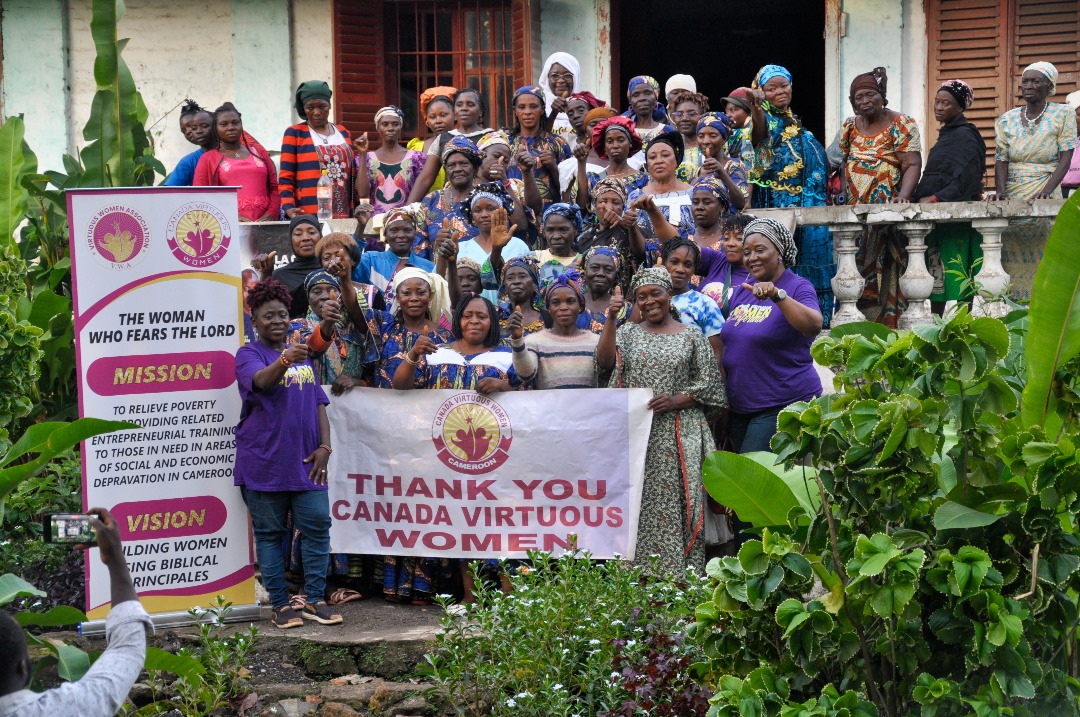

Advocacy can feel abstract until you meet the woman behind the statistic. A reflection on why CAVIWO brings community voices into the rooms where decisions are made.
Policy is written in offices far from the women it affects most. A line in a housing regulation, a threshold in an income support program, a definition in an anti-discrimination statute, each can quietly determine whether a family keeps a roof over its head. The people who write these rules are, for the most part, well intentioned. They work with data, consult experts, and aim for fairness as they understand it. What they often lack is the lived knowledge of the women whose lives their words will shape. That gap, between the office where policy is written and the kitchen table where it lands, is the space our advocacy work tries to fill.
We believe the women who live the consequences of policy deserve a seat at the table where it is written. Our advocacy work carries community voices into consultations, equity initiatives, and partner coalitions, not as tokens but as experts on their own lives. There is a difference between being invited to speak and being heard, and there is a further difference between being heard and being heeded. We aim for the third. A woman's testimony should not be a box checked on an equity form. It should be a force that reshapes the decision being made.
The challenge, of course, is that policy rooms are not naturally welcoming to community voices. They have their own language, their own pace, and their own assumptions about who counts as an expert. A woman who has lived the consequences of a housing policy for a decade may not speak the language of that policy, but she understands its effects more deeply than any consultant. Our role is to bridge that gap, to help women translate their lived expertise into the formats the rooms require, and to help the rooms recognize that lived expertise is, in fact, expertise.
Last year, a member of our advocacy circle testified at a municipal equity review. She spoke for seven minutes about what it means to be passed over for housing because of your name. She did not cite studies. She did not reference frameworks. She told the story of applying for forty apartments with her own name and receiving no responses, then applying to the same apartments with a friend's name and receiving callbacks within days. The room went quiet. Afterwards, a council member told her it was the first time he had understood the issue as a human one. That is the distance our work tries to close.
Change at the policy level is slow. But when it comes, it comes because someone insisted that a woman's life mattered enough to be heard. We have learned to be patient without being passive. We show up to the consultations. We submit the briefs. We build relationships with the decision makers, not to flatter them, but to ensure that when a policy is being written, the women we serve are in the room, in person or in spirit. Persistence, we have found, is its own form of expertise.
There is a temptation, in advocacy work, to focus only on the big wins, the new law, the changed regulation, the funded program. We celebrate those, when they come. But we have learned that some of the most important changes are invisible. A clause softened. A threshold adjusted. A definition broadened by a single word. These small shifts can change thousands of lives without ever making a headline. We track them, we name them, and we make sure the women who fought for them know that their persistence mattered, even when the victory was quiet.
We also do the unglamorous work of helping women engage with policy that already exists. A woman who does not know she is eligible for a benefit cannot claim it. A woman who does not know how to appeal a denial cannot challenge it. A woman who does not know her tenant rights cannot enforce them. Our advocacy is not only about changing policy but about making existing policy work for the women it was meant to serve. Sometimes the most radical act of advocacy is simply making sure a form gets filled out correctly and submitted on time.
One woman we worked with had been denied a benefit she was clearly entitled to, simply because the form had been filled out incorrectly by an overwhelmed caseworker. She had accepted the denial, assuming the system must be right. When we sat with her and read the letter together, it took twenty minutes to identify the error and begin the appeal. She received the benefit three months later. That is advocacy at its most ordinary and its most essential. The system is not always malicious. It is often just indifferent, and indifference, when you are already struggling, can feel exactly like malice.
We dream of a day when advocacy will be less necessary, when systems will be designed with the women they affect most actually in mind. We are not naive about how far away that day is. Until it arrives, we will keep showing up, keep speaking, and keep insisting that policy is not an abstraction. It is a woman's life. It is a child's future. It is a family's shelter. Every line written in those distant offices lands somewhere, and where it lands, we intend to be.
If you support this work, you are not funding abstractions. You are funding the bridge between a policy room and a kitchen table. You are making it possible for a woman's seven minutes of testimony to change a regulation that will shape ten thousand lives. That is the quiet, patient, essential work of advocacy, and we are grateful to everyone who makes it possible.
We have learned that the most effective advocates are often the women who never imagined themselves as advocates. A mother who speaks at a school board meeting for the first time, her voice shaking, is an advocate. A tenant who organizes her neighbors to challenge an unfair practice is an advocate. A newcomer who tells her story to a journalist is an advocate. We do not require our advocates to be polished or professional. We require only that they be willing to speak, and we provide the support that makes the speaking possible. The democratization of advocacy is, we believe, the precondition for policy that truly serves the people it affects, because the people most affected are the ones whose voices, once heard, change the conversation entirely.
There is a follow-up to that testimony at the municipal review that we carry with us. The council member who said he finally understood the issue as a human one asked, months later, to visit one of our circles. He came, he listened for an hour, and he left with a notebook full of names and stories. We did not ask him to change anything that day. We asked him only to listen, and the listening, we have learned, is where all real policy change begins. A regulation written by someone who has listened to the women it affects is a different regulation than one written by someone who has not. We cannot always get the listeners into the room. When we can, we never waste the chance, because a single hour of listening can reshape a decade of policy, and the reshaping is the change we are ultimately working toward.
Written by
Adeline Ijang
Contributor to the CAVIWO community sharing stories of hope, resilience, and advocacy.