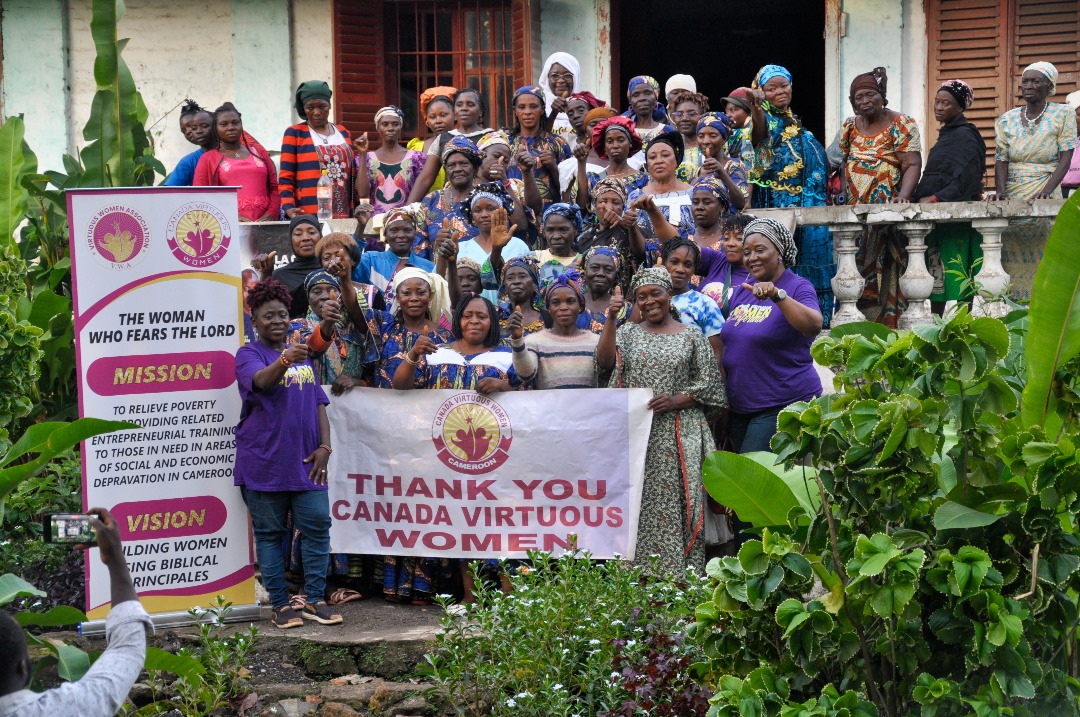
For many racialized women in Canada, discrimination is not an isolated incident but a daily reality. Our Anti-Racism workshops create brave spaces where lived experience becomes collective power.
Racism rarely arrives with a single dramatic moment. More often it accumulates in small indignities, the apartment application that is never answered, the promotion that quietly passes by, the classroom where a child is overlooked. For Black and racialized women in Canada, these moments compound into barriers that shape access to housing, employment, healthcare, and justice. Each moment, taken alone, can be dismissed as a misunderstanding. Taken together, they form a pattern that is impossible to ignore and exhausting to endure.
We begin here because naming the pattern is the first act of resistance. So many of the women who walk through our doors have spent years being told that their experiences were imagined, exaggerated, or simply the way things are. They have learned to swallow the indignities, to smile through the slights, and to question their own perception. The cost of that silence is measured in stress, in illness, in diminished ambition, and in a quiet erosion of the self. Our work begins by giving that silence a voice.
Our Anti-Racism and Social Justice program was created to name those barriers honestly and to dismantle them together. In our workshops, women gather in facilitated circles to unpack bias, examine privilege, and share the experiences they have long been told to swallow. There is no shame in these rooms, only truth and the slow, steady work of change. We do not ask anyone to perform their pain for an audience. We ask only that they bring it into a space where it will be believed, witnessed, and met with solidarity rather than skepticism.
The structure of our workshops is deliberate. We begin with story, because story is where understanding starts. A woman speaks her experience in her own words, without interruption, without challenge, and without the demand that she justify what she lived. The circle listens. Then, together, we examine the systems behind the story. Why was her application never answered? What does the data say about rental discrimination against racialized names? What rights does she have, and what institutions exist to enforce them? The personal becomes the political, not as a slogan, but as a practical path forward.
We partner with legal clinics, settlement agencies, and policy advocates so that the conversations do not end at the door. When a woman understands her rights, she can teach her children. When a community understands its rights, it can hold institutions accountable. That is how lived experience becomes collective power. A single woman who knows how to file a human rights complaint is powerful. A circle of women who know how to do it together is transformative. We have watched that transformation happen, one workshop at a time, across years of patient work.
One participant, a newcomer from East Africa, arrived at her first workshop convinced she had no voice in this country. She had been in Canada for two years, held a graduate degree from her home country, and was working a survival job that did not use a fraction of her training. She had applied for dozens of roles in her field and received no responses. She had begun to believe the silence was a verdict on her worth. By the third session she was helping facilitate. She now leads a peer circle of her own. Her story is not unique. It is the pattern we see again and again when women are given a safe space to speak and the tools to act.
What changed for her was not her qualifications. They were always strong. What changed was her understanding that the silence she met was not a reflection of her value but a feature of a system that was never built to see her clearly. Once she understood that, she could act. She revised her resume with our coaches, learned how to navigate the hidden job market, practiced interviews until her voice no longer shook, and eventually secured a role that recognized her expertise. More importantly, she stopped believing the lie that her worth was determined by whether a system chose to see it.
The work of anti-racism is never finished, but it is always worth doing. Every workshop, every listening circle, every warm referral to a trusted partner moves us closer to communities where every woman truly belongs. We measure our progress not in grand declarations but in the quiet moments. The woman who files a complaint she would once have abandoned. The mother who advocates for her child in a school meeting she would once have left silent. The newcomer who walks into an interview knowing the truth of her own value. These are the moments that build a movement.
We are often asked whether this work is discouraging, given how deep the roots of racism run. We answer honestly. Yes, it can be. There are days when the weight of it feels heavier than we can carry. But there are also days when a woman who has been silent for a decade speaks her first full sentence in our circle, and the room holds its breath, and then exhales together, and something shifts that no policy could have shifted. Those days remind us why we do this. The system is slow. The women are not. And when the women move, the system eventually has to follow.
If you have read this far, we invite you to be part of this work. You do not need to be an expert. You need only to be willing to listen, to learn, and to stand alongside women who have been standing alone for too long. Anti-racism is not a destination we arrive at. It is a practice we build together, in circles and in systems, in conversations and in courage. We would be honored to build it with you.
We want to be honest about the limits of what a workshop can do. A workshop can name a pattern, but it cannot, by itself, dismantle the systems that produce the pattern. The dismantling happens in the weeks and months after the workshop, in the decisions a woman makes about where to live, how to advocate for her children, how to challenge a landlord, how to file a complaint she would once have abandoned. Our work is not finished when the circle ends. It begins there, and we have learned to measure our impact not in attendance but in the actions our participants take long after they have left the room. Those actions are the real curriculum, and we are proud of every one of them.
There is a particular kind of grief that racialized women carry that we have learned to hold. It is the grief of the gap between the country we were promised and the country we sometimes experience. Canada is, in many ways, a place of extraordinary welcome, and we do not diminish that. But it is also a place where a woman's name can cost her an apartment and her accent can cost her a job, and the gap between the ideal and the reality is a grief that is rarely named. We name it, in our circles, and in the naming we help women hold both truths at once, that they are grateful to be here and that they are sometimes wounded here. The holding of both is the beginning of an honest belonging, and the honest belonging is, we believe, the only kind that lasts.
Written by
Adeline Ijang
Contributor to the CAVIWO community sharing stories of hope, resilience, and advocacy.