Canada's strength is its diversity, but diversity needs a table. How our community dinners build belonging one shared meal at a time.
There is a reason every culture builds community around food. A shared meal is the oldest technology of belonging. When strangers break bread, something breaks open between them. Our community dinners are built on that ancient, simple truth. We do not overthink the format. We set a table, we invite the community, we share food, and we trust the table to do what tables have always done, which is to turn strangers into neighbors and neighbors into friends. The trust is not naive. It is earned, dinner after dinner, in the small transformations we witness every time we gather.
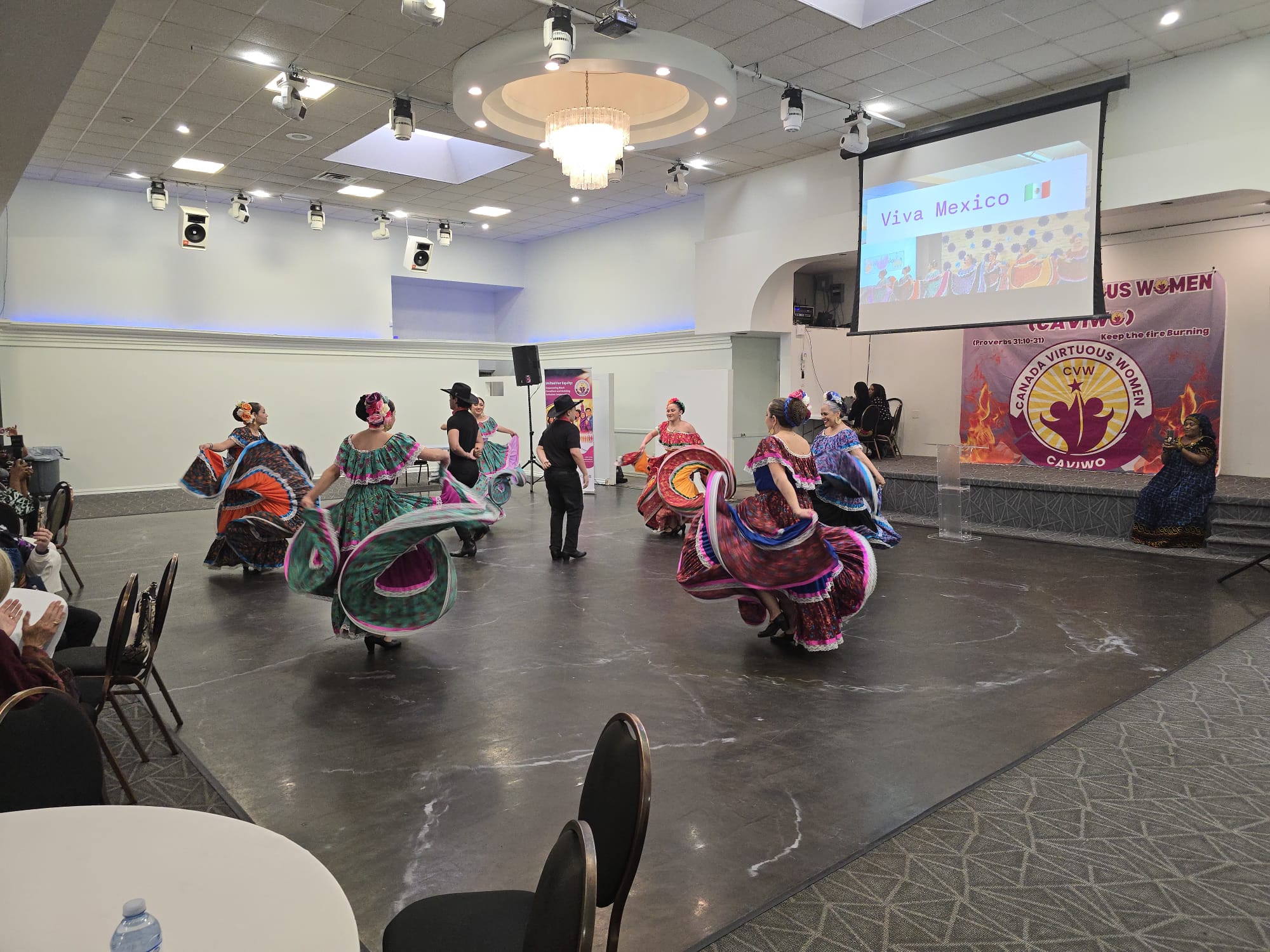
Canada's strength is its diversity, but diversity does not build itself. It needs a table. Our dinners bring together women and families from across cultures to share food, music, and conversation. The dishes are different. The laughter is the same. The sameness of the laughter is the point, and the discovery of it is the gift. A woman who has lived beside a neighbor of another culture for years without ever sharing a meal discovers, over a single dinner, that the neighbor's laughter sounds like her own, and that discovery does more for integration than any policy or program. The table is where the abstraction of diversity becomes the reality of relationship.
We have watched a woman from Cameroon teach a woman from Ukraine to fold a traditional pastry. We have watched a child from India and a child from Nigeria discover they love the same song. These are small moments, but they are the mortar of a community. Without them, diversity is just proximity. With them, it is belonging. The distinction matters, because proximity without relationship produces tolerance, while proximity with relationship produces care, and care is what a community needs to hold together through the inevitable frictions of difference. We build the table because we know that the care is built there, one meal at a time.
The dinners are deliberately informal. We do not curate a program. We set the table, we welcome the guests, and we let the food and the conversation do the work. The informality is the design, because we have learned that the most meaningful connections happen in the unstructured spaces, between the courses, around the edges of the room, in the conversations that no one planned. We protect those spaces. We do not fill every moment with activity. We leave room for the spontaneous, and the spontaneous is where the belonging is built.
We are intentional about who is at the table. We invite across lines of culture, age, language, and tenure in Canada, because a table that gathers only the similar reinforces the boundaries that integration is meant to dissolve. We reach out to newcomers who have not yet found community. We reach out to long-time residents who have not yet connected across cultures. We reach out to the isolated, the shy, and the recently arrived, and we seat them beside the established, the outgoing, and the long-rooted, and we trust the table to do its work. The seating is not random. It is hopeful, and the hope is rewarded more often than we deserve.
One dinner, a woman who had been in Canada for three weeks sat beside a woman whose family had been in Canada for three generations. They did not share a language fluently. They shared a meal, and they shared the help of a younger woman who translated between them, and by the end of the evening they had exchanged phone numbers and promised to meet again. They did. They are now close friends, and the friendship is the kind of integration that no program could have produced but that a table made possible. We tell this story because it is not exceptional. It is typical, and its typicality is the evidence that the table works.
We also celebrate the food itself, because the food is not incidental to the belonging. A woman who brings a dish from her homeland brings a piece of her identity to the table, and the table that receives it honors that identity rather than erasing it. We do not ask women to leave their culture at the door. We ask them to bring it to the table, literally, and the table that is full of many cultures is a table that is richer than any monoculture could be. The food is the medium. The honor is the message, and the message is that you belong here, fully, without dilution.
The dinners also build a network of mutual aid that extends far beyond the evening. Women who meet at the table discover each other's skills, needs, and gifts, and the discoveries become exchanges. A woman who needs childcare finds a woman who provides it. A woman who needs a ride finds a woman who drives. A woman who needs a translation finds a woman who speaks both languages. The table is not only a place of belonging. It is a marketplace of mutual care, and the care that is exchanged there sustains the community long after the dishes are washed.
A table where everyone fits is not built by accident. It is built by people who decide that the person across from them is not a stranger but a neighbour. We make that decision every time we set the table. We invite you to pull up a chair. The invitation is open, the table is long, and there is always room for one more. The belonging we build is not exclusive. It is expansive, and it grows every time a new person sits down and discovers that the seat was waiting for them. That is the work, and it is the most joyful work we do.
If you have been in Canada for a day or a decade and have not yet found a table where you fit, we want you to know that the table is set, the food is ready, and the chair is yours. You do not need to bring anything but yourself. You do not need to know anyone. You do not need to speak the language perfectly or understand the customs fully. You need only to come, to sit, and to share a meal with people who are waiting to discover that you are the neighbor they did not know they were missing. The table is where everyone fits. Come find your seat.
There is a practice we have developed at our dinners that we have come to see as the heart of the work, and it is the practice of the introduced dish. Before the meal begins, we invite each woman to stand and say, in a sentence, what she brought and where it comes from. The introductions are brief, and they are profound, because they turn a room of eaters into a room of cultures, and they give each woman the experience of being the bearer of a tradition rather than the assimilator into one. A woman who stands and says, this is my grandmother's recipe from the village where I was born, offers the room a gift that no menu could contain, and the room that receives the gift is changed by it. We have learned things about one another through the introduced dish that years of proximity never revealed, and the learning is the belonging, made edible, one sentence at a time.
We have also learned that the dinners produce a particular kind of trust that is hard to build in any other setting, because the sharing of food is, across every culture, an act of vulnerability and welcome. A woman who feeds you has, in every tradition, offered you something more than calories. She has offered you her table, her labor, and her welcome, and the offering, received, creates a bond that a thousand meetings could not replicate. The women who have eaten one another's food at our dinners carry a trust into every subsequent interaction that is grounded in the most ancient human exchange there is, and the trust is what makes the mutual aid, the friendships, and the integration that follow possible. We do not engineer the trust. We set the table, and the trust is what the table has always produced.
There is a follow-up to the dinners that we have built quietly into the rhythm of the program, and it is the weekly check-in among the women who have met at the table. We encourage, gently, the women who sit beside one another to exchange numbers and to reach out once in the following week, not for any purpose but simply to say hello. The hello is the thread that turns a single dinner into an ongoing relationship, and the ongoing relationship is what turns integration from an event into a life. We have watched women who met at a single dinner become weekly walking partners, co-parents at the school gate, and eventually the kind of friends who show up at one another's doors in a crisis. The dinners are the seed. The weekly hello is the water, and the friendship is the fruit, and we tend all three because we have learned that a dinner without the follow-up is a lovely evening, but a dinner with the follow-up is the beginning of a belonging that lasts.
We measure the fruit of this work in the friendships that cross cultural lines, in the communities that welcome across difference, and in the Canada that is being built, one meal, one introduced dish, one weekly hello at a time, into the country it has always aspired to be. The building is slow, and the setbacks are real, but the fruit is visible in every dinner, every friendship, every table where a woman who arrived a stranger leaves a neighbor. We set the table with joy, because the joy is the point, and because the Canada we are building is a Canada worth building, and the building is the work we are honored to do.
Written by
Adeline Ijang
Contributor to the CAVIWO community sharing stories of hope, resilience, and advocacy.