Once a year, we throw a festival that turns our community into a living map of the world. A celebration of the cultures that make CAVIWO what it is.
Once a year, the room we gather in becomes a map of the world. A woman in Cameroonian ndop sits beside a woman in Indian silk. A Kenyan song follows a Nigerian praise. A child waves a flag from a country he has only heard his grandmother describe. This is our cultural festival, and it is the most joyful day on our calendar. The joy is not manufactured. It is the natural product of a room in which every culture is welcomed, every story is honored, and every person is invited to bring the fullness of who they are. We do not produce the joy. We create the conditions, and the joy arrives on its own.
The festival is not performance. It is presence. We do not curate a polished show. We open a stage and invite the community to fill it with whatever they carry, a dance, a dish, a story, a song. What arrives is always more than we planned, and it is always exactly right. The openness is the design, because we have learned that a curated festival showcases a few and excludes the rest, while an open festival welcomes all and discovers, in the welcoming, talents and traditions that no curation could have anticipated. We trust the community to fill the stage, and the community rewards the trust every year.
Last year, eight cultures were represented, and over four hundred newcomers joined the celebration. A woman who had been in Canada for three weeks told us it was the first time she had felt at home. She had not yet learned the language. She had learned the table. The table is the deeper language of the festival, the language of shared food, shared music, shared laughter, and shared pride. A woman who has not yet learned the words can speak the table fluently, and the table is what makes her feel at home before the words arrive. The festival is, in this sense, a translation of belonging into a language everyone speaks.
We are deliberate about the welcome, because a festival that is welcoming in intention but not in execution will exclude the very people it means to include. We greet every guest personally. We explain what is happening for those new to the traditions. We ensure that no one is left standing alone, that every newcomer is drawn into a conversation, a dance, a shared plate. The deliberate welcome is labor-intensive, and it is the labor that makes the festival what it is. We do not simply open a door. We stand at the door and walk people in, and the walking in is what turns an event into a homecoming.
The children are at the center of the festival, because the children are the future of the integration we are building. We design activities that let them explore the cultures in the room, that let them taste the foods, hear the music, try the dances, and ask the questions that adults are sometimes too polite to ask. The children who grow up attending the festival will carry, into their adulthood, a comfort with diversity that no workshop could teach, and that comfort is the foundation of the Canada we hope they will build. We invest in the children because the return on the investment is generational.
We also use the festival to build bridges with the wider community, because integration is not only an internal matter. We invite neighbors, employers, service providers, and local officials, and we give them an experience of the community that no report could convey. A local employer who eats a meal prepared by a newcomer and watches her child dance leaves the festival with a different understanding of the people he has been hiring, or failing to hire. The experience is the advocacy, and the festival is, in this sense, one of our most effective tools for changing the way the wider community sees the people we serve.
Diversity is not a statistic. It is a festival. It is the decision, made together, that every culture in the room is worth celebrating, and that the room is richer because all of them are in it. The festival is the embodiment of that decision, and the embodiment is what makes the decision real. A community that celebrates its diversity once a year is a community that has practiced the celebration, and the practice makes the celebration possible in the other fifty-one weeks, in the small daily interactions where the belonging is truly built. The festival is the rehearsal. The daily life is the performance, and we are building both.
We have learned that the festival changes the people who organize it as much as the people who attend it. The volunteers who spend months planning the festival discover, in the planning, the depth of the cultures in their community, and the discovery changes them. They become more curious, more respectful, more connected. The festival is not only for the guests. It is for the organizers, and the transformation of the organizers is one of its most important and least visible outcomes. We invest in the organizing team because we know that the team that builds the festival is also the team that builds the community, and the building is the work.
One volunteer, after her first year organizing, told us she had lived in her neighborhood for fifteen years and had never known the richness of the cultures around her until she helped plan the festival. She now volunteers year-round, building the bridges the festival celebrates. Her story is the story of the festival's deepest impact: it does not only connect newcomers to the community. It connects the community to itself, revealing to long-time residents the wealth they have been living beside without seeing, and inspiring them to become the neighbors they did not know they could be. That revelation is the gift the festival gives to everyone it touches.
If you have never attended and are wondering whether there is a place for you, we want you to know that the place is ready and the welcome is warm. You do not need to perform. You do not need to represent. You need only to come, to eat, to listen, to dance if you wish, and to discover, in the room full of cultures, that yours is welcome too, whatever yours is. The festival is the celebration of us, all of us, and the us is larger and richer than any of us knew. Come and find your place in it. The stage is open, the table is set, and the joy is waiting for you to arrive.
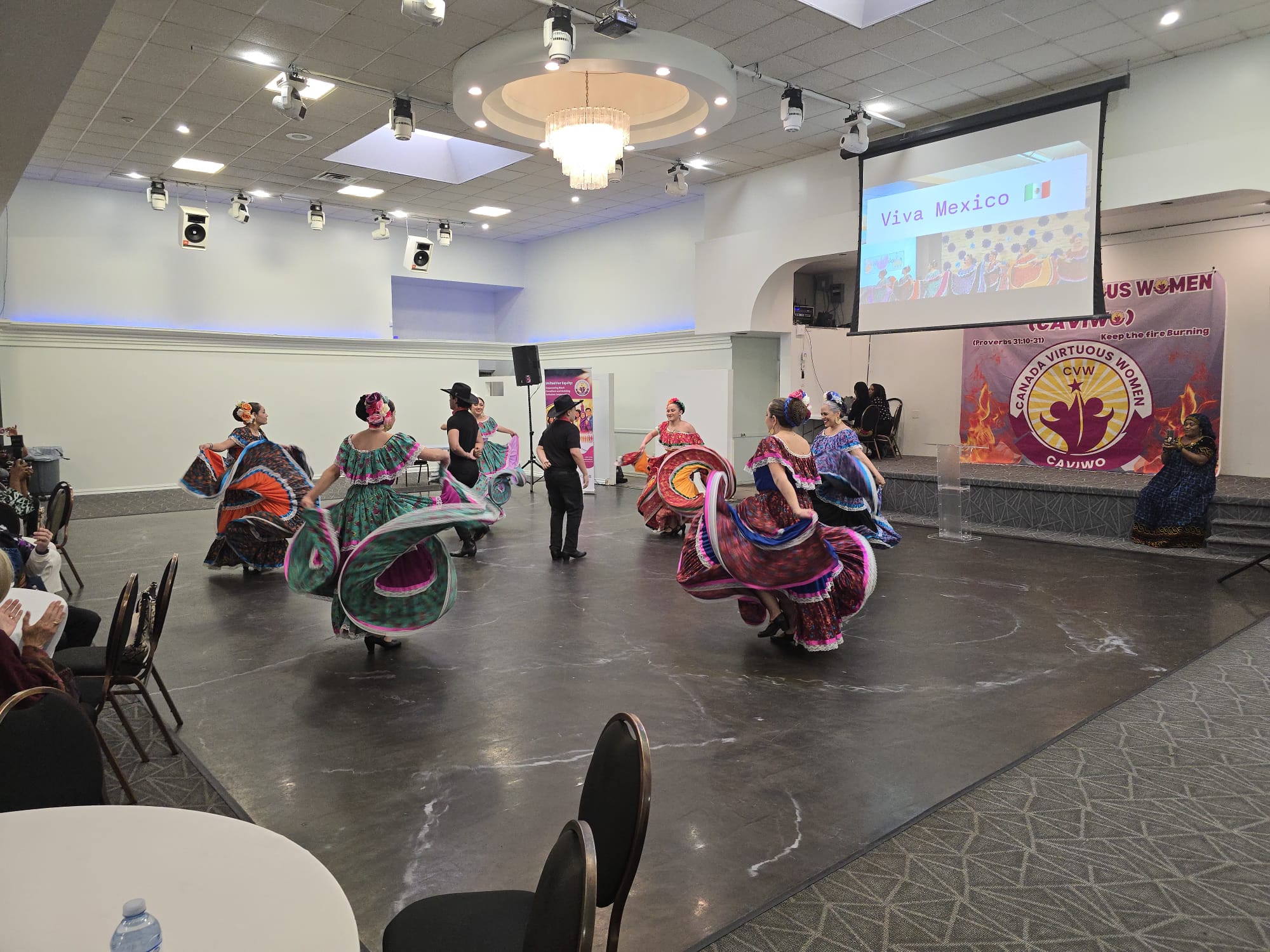
There is a moment at every festival that we have come to anticipate with particular joy, and it is the moment the dancing begins. It always starts with the children, because children do not need permission to move when they hear music. Then a mother joins. Then a grandmother. Then a woman who has been sitting alone for an hour, watching, is pulled gently to her feet by a new friend, and the floor fills with bodies of every age and every culture moving to rhythms that some of them have known all their lives and some of them are hearing for the first time. The dancing is the festival's truest expression, because it is the moment the watching becomes the participating, and the participating is the belonging, made visible and made physical and made joyful in a way that no speech or ceremony could replicate. We protect the dancing. We make the floor large and the music generous, because we have learned that the dancing is the memory the women carry home, and the memory is what brings them back the following year.
We have also learned that the festival produces a particular kind of pride in the women who share their culture on the stage, a pride that is different from the pride of private practice, because it is witnessed. A woman who cooks her traditional food in her kitchen is practicing her culture. A woman who serves that food to a room of four hundred people, and watches them savor it, is claiming her culture as a gift to the community, and the claiming, in public, is an act of integration that no private practice could achieve. We have watched women who were shy about their traditions in their first year return in their second year with larger dishes, longer performances, and brighter costumes, because the witnessing of the first festival gave them the confidence to bring more of themselves to the second, and the more is the sign that the integration is deepening, one festival, one witnessed dish, one brave performance at a time.
There is a detail of the festival that we have refined over the years that we consider essential, and it is the passport. We give every child a small paper passport when they arrive, and at each cultural station they visit, they receive a stamp. The passport is a game, and it is more than a game, because it turns the exploration of cultures into an adventure, and the adventure is what ensures that the children do not stay at the station of the culture they already know. A child who wants a full passport must visit every station, taste every food, hear every story, and the visiting is the integration, made into a game that children will play willingly and remember fondly. We have watched children who attended the festival at seven return to volunteer at seventeen, carrying passports that are long since full but never discarded, because the passport was the beginning of their understanding that the world is larger than their own kitchen, and the understanding, once begun, does not stop growing.
We measure the deepest success of the festival in the women who return year after year, bringing more of themselves each time, and in the children who grow up attending and who carry, into their adulthood, a Canada that is not an abstraction but a room full of friends they have known since they were small enough to need a passport to explore it. The festival is a single day. The Canada it builds is a lifetime, and the lifetime, lived among cultures that are known and loved rather than merely tolerated, is the harvest we plant for every time the music starts and the floor fills and the room becomes, for one joyful day, the world we are all trying to build.
Written by
CAVIWO Integration Team
Contributor to the CAVIWO community sharing stories of hope, resilience, and advocacy.