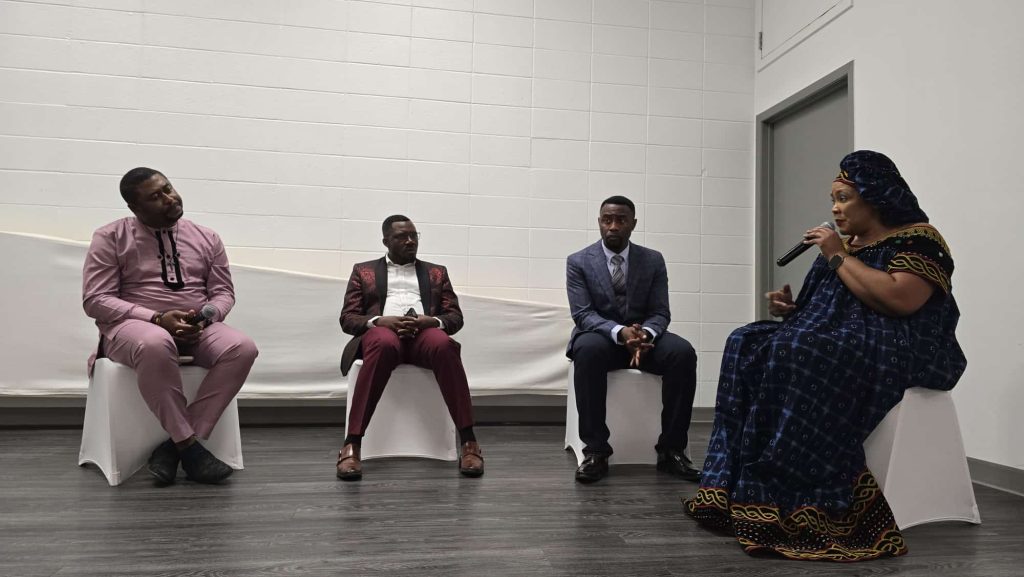
October 16th 2018 meeting was a conversation on how to handle gender based and domestic violence. This was a round table discussion as women narrated their experiences and we shared ideas on how to handle and report these cases. So often we talk about physical abuse and forget the emotional abuse that women go through daily. We are blessed to have a safe space where we can have these conversations and seek help.
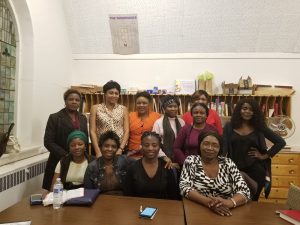
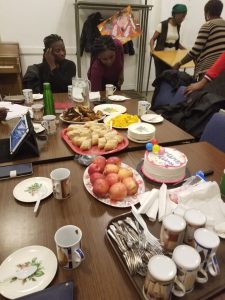
October 16th 2018 meeting was a conversation on how to handle gender based and domestic violence. This was a round table discussion as women narrated their experiences and we shared ideas on how to handle and report these cases. So often we talk about physical abuse and forget the emotional abuse that women go through daily. We are blessed to have a safe space where we can have these conversations and seek help. When women assemble without pretense or fear of retaliation, the thick walls of silence that preserve abuse begin to crack. That autumn evening in Ottawa, an intimate gathering of immigrant women, mothers, sisters, and community leaders pulled chairs together around a humble wooden table. Plates of fruit, bread, warm tea, and celebratory cake were shared, yet the spiritual and emotional nourishment occurring in the room went far deeper than physical sustenance.
Gender-based violence remains one of the most widespread violations of basic human rights globally and within Canadian borders. For women arriving from African and immigrant diaspora communities, navigating domestic abuse carries layers of acute complexity. In many ancestral societies, matrimonial disputes are fiercely relegated to the private sphere, while cultural stigmas brand any woman who speaks openly about marital mistreatment as rebellious or disloyal. Immigrant women frequently endure the compounded vulnerabilities of precarious legal status, language barriers, financial dependency, and unfamiliarity with provincial child welfare and policing frameworks. When trapped inside hostile homes, these women often feel they have nowhere to turn. They fear that calling the authorities could lead to deportation, separation from their children, or total ostracization by community members. The October 16th gathering dismantled this paralyzing silence by affirming that every woman's physical, psychological, and emotional safety is non-negotiable.
As hands clasped tightly across the table in solidarity, the atmosphere shifted from quiet apprehension to profound vulnerability. One woman began by recalling the insidious nature of emotional torment that had defined her marriage for over a decade. While bruises on the skin heal and present clear physical evidence to healthcare providers and police officers, psychological violence leaves deep, invisible lacerations across a woman's sense of self-worth. She recounted the constant surveillance, the deliberate degradation of her intelligence, the mocking of her cultural accent in public, and the relentless gaslighting that left her questioning her own sanity. For years, she had convinced herself that because her spouse had never raised a fist, she was not truly being abused. It was only when listening to the shared testimonies of other women in the CAVIWO circle that the veil lifted, enabling her to recognize emotional control as a systemic form of violence.
The discussion highlighted how abusers deliberately utilize emotional and psychological warfare as a preparatory mechanism. An abuser isolates his partner by disparaging her friends, sabotaging her career ambitions, and gradually severing ties with supportive church members or relatives. When a woman is systematically convinced that she is incapable, unlovable, and completely dependent on her abuser, she is already in psychological captivity. The attendees on October 16th unpacked the subtle warning signs that often precede severe physical harm: excessive jealousy disguised as protective love, sudden mood swings that force family members to walk on eggshells, explosive outbursts followed by extravagant gift-giving, and the deliberate deprivation of sleep or basic financial autonomy.
Financial and economic abuse was another critical dimension brought to the table during the session. Several participants described scenarios where spouses completely withheld household finances, forbade them from seeking Canadian employment or attending language classes, and retained total dominion over joint bank accounts and government benefit cheques. A woman who cannot buy a transit pass or purchase groceries without pleading for funds has been systematically stripped of her agency. In our roundtable, experienced community facilitators explained practical pathways to financial independence, including opening separate confidential bank accounts, understanding credit history in Canada, accessing emergency food banks without fear, and exploring vocational upskilling programs provided by organizations like CAVIWO.
The emotional toll of economic entrapment is profound. When a woman cannot foresee how she will pay for her children's winter jackets or feed them tomorrow morning, the courage to escape violence is severely constrained. The meeting addressed this harsh reality head-on. The women affirmed that no woman should ever be forced to choose between physical safety and absolute destitution. By sharing information about provincial emergency shelter allowances, community baby pantries, and short-term micro-grants, the group charted concrete lifelines designed to ease the transition from captivity into self-sufficiency.
Reporting cases of gender-based violence requires immense courage and strategic preparation. A major portion of the October 16th workshop focused on the practical mechanics of safety planning and safe disclosure. Attendees discussed the dangerous myth that leaving an abusive relationship is simply a matter of packing a suitcase and walking out the front door. Statistics continually demonstrate that the period immediately preceding and following a woman's departure is the most perilous window for fatal retaliation. Therefore, the women reviewed comprehensive emergency exit plans: identifying safe allies within the neighborhood, memorizing key emergency phone numbers rather than relying solely on tracked mobile phones, secretly storing duplicates of essential documents such as passports, birth certificates, and permanent residency papers, and keeping a concealed overnight bag with basic necessities for children.
The roundtable also examined the institutional avenues available in Ottawa and Ontario. CAVIWO leaders demystified the roles of the Assaulted Women's Helpline, local crisis lines, transitional housing facilities, and community legal aid clinics. Many immigrant women hold justified distrust or terror of law enforcement, shaped by corrupt policing in their countries of origin or genuine fears regarding immigration enforcement. The session clarified legal rights under Canadian law, emphasizing that emergency services, medical triage, and domestic violence shelters are mandated to provide protective care regardless of immigration status. Women were empowered with concrete knowledge about restraining orders, emergency protection orders, and child safety protocols, ensuring that fear of the legal system no longer acts as a barrier to escaping danger.
Beyond the Physical: Recognizing Psychological & Emotional Coercion
Isolation Tactics
Severing contact with friends, community circles, and family members to enforce complete dependency.
Economic Control
Withholding bank cards, forbidding employment, or confiscating paycheques and immigration papers.
Verbal Degradation
Persistent humiliation, gaslighting, weaponized shame, and threats of deportation or abandonment.
Digital surveillance and technology-facilitated abuse were addressed with sharp clarity during the roundtable. In an age where smartphones and connected devices permeate every home, abusers increasingly use stalkerware, shared cloud accounts, vehicle GPS trackers, and monitoring applications to track a woman's every movement and conversation. The workshop offered pragmatic digital hygiene guidelines: creating secret email addresses unknown to the household, browsing crisis resources exclusively in incognito mode or on public library computers, turning off location permissions on social applications, and establishing pre-agreed code words with trusted friends that signify the need for immediate emergency intervention without alerting the perpetrator.
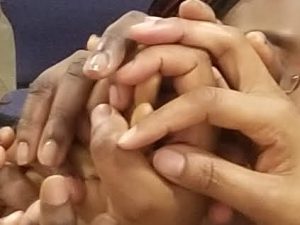
Throughout the dialogue, the spiritual and communal aspect of CAVIWO was palpable. This was not an academic lecture delivered from a podium; it was an authentic sisterhood circle where grief and laughter mingled freely. When one sister broke down in tears while recounting how her self-esteem had been shattered, the entire room encircled her in silent affirmation and gentle touch. Hands joined over hands, exemplifying the foundational heartbeat of CAVIWO: that when one member suffers, all members suffer together, and when one is lifted, the entire community rises. That physical touch of warmth conveyed what words often fail to express: 'We see your pain, we believe your truth, and you will never face this storm alone again.'
The role of faith and community doctrines in addressing domestic violence sparked vigorous and deeply honest exchange. Too often in religious environments, misconstrued interpretations of marital submission or spiritual forbearance have been weaponized to convince suffering women that staying in an abusive home is an act of pious obedience. The CAVIWO leadership spoke firmly against this damaging theology. God's heart has never been for women to endure cruelty, terror, and subjugation. True spiritual virtue is rooted in dignity, peace, and mutual respect, not subjugation to violence. A marriage or home infected by abuse has already broken its sacred vows. The meeting affirmed that seeking safety, involving legal authorities, and separating from an unrepentant abuser is both morally righteous and spiritually sound.
Children caught in the crossfire of domestic abuse received special focus. Even when a child is not the direct target of physical blows, witnessing parental violence, hearing screams behind closed doors, and soaking in an atmosphere of constant tension inflicts lasting neurological and emotional trauma. Women at the table shared their heartfelt anxieties about the psychological scars carried by their sons and daughters: bed-wetting, severe anxiety, sudden academic declines, and aggressive behavior modeled after the abusive parent. The gathering discussed resources for specialized pediatric trauma counseling, school-based mental health navigators, and the vital role mothers play in creating calm, peaceful micro-environments where young minds can finally exhale and begin to heal.
Breaking generational cycles of violence was recognized as one of the most vital imperatives of our sisterhood. When mothers gather the courage to draw a boundary against abuse, they rewrite the destiny of their lineages. Daughters raised in homes free from violence learn that their bodies and spirits are sacred, while sons witness firsthand that masculinity is measured by tenderness, integrity, and mutual respect rather than domination and threats. The women committed to continuing these conversations inside their living rooms and church fellowship groups, ensuring that the next generation grows up equipped with the language of healthy boundary-setting.
The necessity of confidential peer support emerged as the crown jewel of the CAVIWO mission. While government agencies and social workers provide critical structural assistance, they cannot replace the enduring bond of a sisterhood who shares cultural context, immigration journeys, and lived experience. A social services case file closes after a set number of weeks; a sisterhood remains present through every subsequent chapter. CAVIWO's commitment to continuous, weekly check-ins provides women with a reliable anchor. Having a fellow sister whom you can call at midnight when panic strikes, or who will accompany you to court hearings and doctor appointments, turns the terrifying prospect of starting over into an achievable reality.
As the meeting approached its conclusion, concrete action items were established to carry the momentum forward into the broader Canadian community. The women resolved to organize quarterly awareness forums, create multilingual educational pamphlets outlining the differences between healthy, strained, and abusive relationships, and establish a dedicated rapid-response team capable of assisting women with emergency transportation and transition essentials. No woman who reached out to CAVIWO would ever be turned away with a cold referral; every plea for help would be met with warm, personalized accompaniment from intake to stable recovery.
The round table concluded with a renewed covenant of solidarity. Every participant pledged to be an ambassador of peace and safe disclosure in her own network. If a neighbor heard cries next door, she would not turn a blind eye or dismiss it as domestic drama; she would check in, offer safe shelter, and assist in connecting the woman to established crisis pathways. The culture of silence thrives on apathy and collective embarrassment, and the women of CAVIWO determined that their community would be defined by vigilant compassion.
Steps to Safe Disclosure & Protection in Ontario & Beyond
- 1.Confidential Helpline: Reach Ontario's Assaulted Women's Helpline (1-866-863-0511) or CAVIWO's direct team at 613-880-2295.
- 2.Digital Safety: Always clear browsing histories, utilize private windows, and keep communications on a secure trusted device.
- 3.Community Safe Havens: Peer circles and trusted faith/community gatherings offer emotional grounding and warmth before institutional navigation.
Looking back at the October 16th, 2018 meeting from the vantage point of today, that evening represented a historic turning point in CAVIWO's evolution. What began as an intimate circle in Ottawa has blossomed into an international movement spanning branches across Africa, North America, and beyond. Yet the foundational ethos established around that table has never changed: radical empathy, unflinching honesty, unwavering confidentiality, and practical empowerment. In a society that too often minimizes emotional cruelty and overlooks the quiet suffering of marginalized women, CAVIWO remains an unshakeable sanctuary.
If you or someone you cherish is navigating the darkness of an unhealthy or abusive relationship, please take comfort in knowing that there is a way forward. You do not need to have all the answers tonight, nor do you need to navigate the difficult path of escape alone. Reach out to CAVIWO, contact trusted crisis hotlines, or confide in a sister who will hold your story in sacred confidence. You are worthy of peace, you are worthy of safety, and your voice will always be honored within our circle.
We honor the brave women who sat around the table on October 16th, 2018. Their courage to speak, their willingness to confront uncomfortable realities, and their boundless love for one another laid the bedrock for thousands of lives that have since been touched, sheltered, and renewed through the ongoing work of CAVIWO.
Through continued advocacy, legislative dialogue, and grassroots education, Canada Virtuous Women will never cease standing in the gap for every woman who cries out for freedom. We continue to invite partners, donors, advocates, and volunteers across Canada and the world to join hands with us, ensuring that every woman finds not only a safe shelter, but the wings to fly into a glorious, self-determined future.
Written by
CAVIWO Editorial Team
Contributor to the CAVIWO community sharing stories of hope, resilience, and advocacy.