
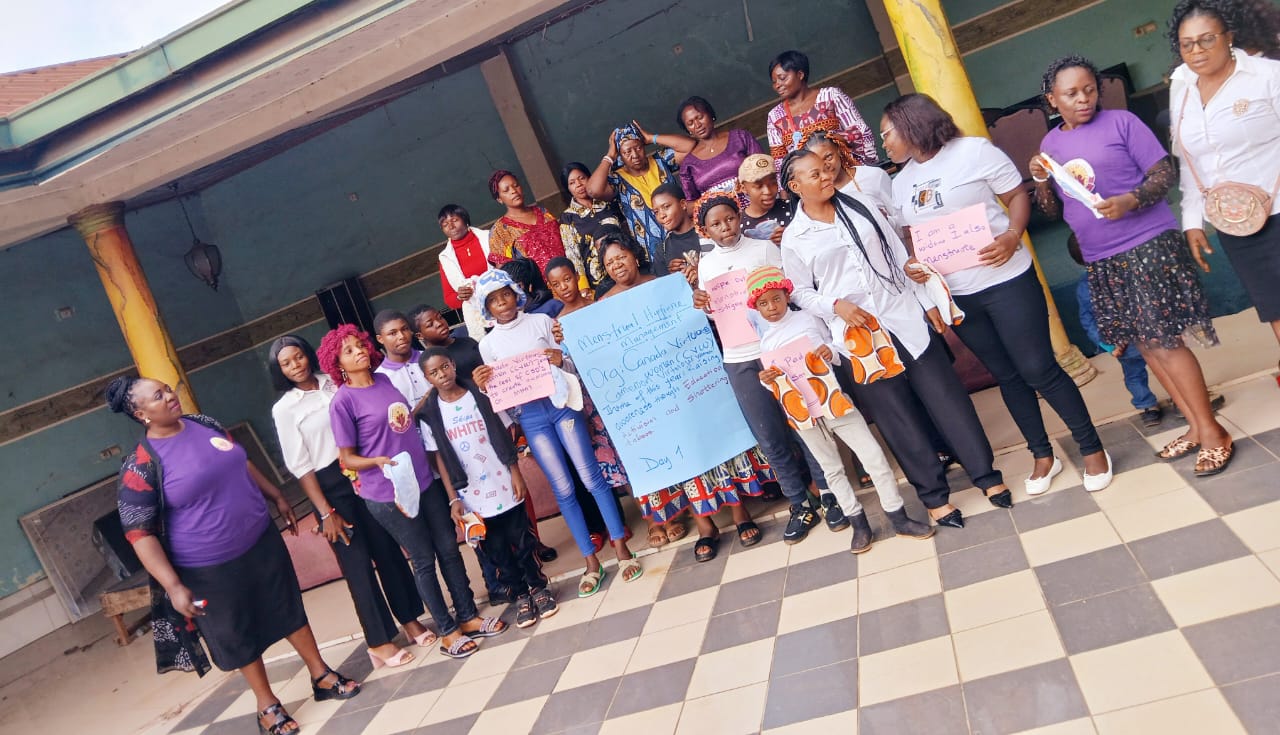
Caregivers give until there is nothing left, and then they give more. Our special needs caregiver support offers a place to rest and be cared for in return.
Caregivers are the quiet backbone of countless families, and they are among the most overlooked people in our community. A mother caring for a child with special needs, a daughter caring for an aging parent, a wife caring for a husband with a chronic illness, each gives until there is nothing left, and then finds a way to give more. The giving is heroic, and it is also, too often, invisible. The caregiver is celebrated in the abstract and abandoned in the particular, and the gap between the celebration and the abandonment is where burnout, illness, and despair take root. We exist to close that gap.
Our special needs caregiver support began with a question: who cares for the caregiver? The answer, too often, is no one. We exist to change that. Our workshops offer practical guidance on navigating systems, accessing resources, and planning for the future, including the question every caregiver fears: what happens to my loved one when I am no longer here? The question is the one no one wants to ask and every caregiver carries. We do not shy from it. We face it with them, with planning tools, with legal guidance, with community, and with the assurance that the question, asked aloud in a room of people who understand, becomes more bearable than it ever was in the silence of the night.
The practical guidance is essential, and we provide it thoroughly. We help caregivers understand the benefits they may be eligible for, the respite care that exists, the legal documents that protect their loved ones, and the systems that govern disability and long-term care. The information is complex and the navigation is exhausting, and we walk with caregivers through it rather than handing them a brochure and wishing them well. The walking is the work, and the walking is what makes the information usable. A caregiver who is already depleted cannot decode a government website alone. We decode it with her, and in the decoding, we return to her a measure of the energy the system was draining.
But just as importantly, we offer rest. We offer a room of people who understand without explanation. We offer permission to set down the weight for an hour and breathe. The rest is not a luxury. It is a medical necessity, and we frame it as one, because caregivers who have been taught that rest is selfish need permission that is grounded in something stronger than encouragement. We give them the permission, and the science to back it, and the community to reinforce it, and we have watched women who had not rested in years discover, in a single afternoon, that rest is possible and that the world does not collapse when they allow themselves to receive it.
One caregiver told us our workshop was the first time in nine years she had been in a room where she was not the one providing care. She wept. Then she laughed. Then she said she would be back. She has been, every month, since. The story is not unusual. The caregivers who find our workshops often describe them as the first place they have been seen as people rather than as functions, and the experience of being seen, after years of being only the one who cares, is itself a form of healing that no practical guidance can substitute for. We provide both, because both are needed, and because the caregiver deserves the whole of what we can offer.
We also address the grief that so many caregivers carry, often unrecognized. The grief of the parent whose child will not follow the developmental path they imagined. The grief of the adult child watching a parent disappear into dementia. The grief of the spouse whose partner is present in body and absent in the ways that once defined the relationship. This grief is real, and it is rarely named, because the caregiver is too busy caring to grieve and the world is too uncomfortable to ask. We name it, in our workshops and in our one-on-one support, and in the naming, we give the caregiver permission to feel what she has been carrying in silence.
Caring for the caregiver is not a luxury. It is a necessity. A community that lets its caregivers burn through themselves to nothing is a community that will soon have no one left to care. We make this argument not as sentiment but as strategy, because the math is simple. A caregiver who is supported can care for years. A caregiver who is unsupported will break, and when she breaks, the person she cared for enters crisis, and the community pays far more for the crisis than it would have paid for the support. We fund the support because it is humane and because it is practical, and the two reasons reinforce each other.
We have learned that the most powerful thing we offer is not any single resource but the community itself. A caregiver who discovers that she is not alone, that others walk the same road, that her exhaustion is understood and her grief is shared, finds a resilience that no workshop alone could provide. The community becomes a place to bring the hard questions, the impossible days, and the small victories that no one else in her life fully understands. We build that community with care, because we know that it is, for many caregivers, the difference between enduring and collapsing, and we will not let it collapse.
We also advocate for caregivers beyond our workshops, because the support a caregiver needs is not only emotional and informational but systemic. We carry the voices of caregivers into the conversations about respite funding, about workplace accommodations, about the policies that determine whether a caregiver can sustain her work or must abandon it. The advocacy is slow and the wins are incremental, but we persist, because a caregiver who is supported by policy is a caregiver who can sustain her care, and the sustainability is what we are ultimately working toward. We will not stop until the systems that govern caregiving are built with the caregiver, not only the recipient, in mind.
If you are a caregiver reading this and recognizing yourself in these words, we want you to know that you are seen, that your exhaustion is valid, and that there is a room full of people who understand without explanation and who are waiting to welcome you. You have given until there was nothing left, and then you gave more. It is time to receive. The workshop is free. The community is warm. The rest is possible. Come, and let us care, for once, for the one who has cared for everyone else. You have earned it a thousand times over, and we are honored to offer it.
There is a question we are asked in every workshop that we have learned to answer with particular care. A caregiver will raise her hand and ask, sometimes trembling, what will happen to her loved one when she is gone. The question is the one that keeps every caregiver awake, and the asking of it aloud, in a room of people who carry the same question, is itself a form of relief. We do not offer false comfort. We offer a plan. We walk caregivers through the legal instruments, the trust structures, the designated beneficiaries, and the conversations with family members that the question demands. We have learned that a caregiver who has a plan sleeps differently than one who does not, and the sleep is, for a caregiver who has not slept well in years, a form of medicine that no prescription can match.
We have also learned that the caregivers who attend our workshops become, over time, the most effective advocates for other caregivers in their communities, because they carry the knowledge and the language to identify burnout in women who have not yet named it. A graduate of our program will notice the signs in a woman at her church, at her child's school, in her neighborhood, and she will approach, gently, and she will say the sentence that no one else has said: I see you, and there is help. The sentence, spoken by someone who has been there, opens doors that no professional could open, and the opening is how the reach of our workshops extends far beyond the women who attend them. We nurture this advocacy, because we believe that the most effective caregiver support network is one in which caregivers themselves are the first responders, and the first response, from someone who understands, is often the one that saves a woman from the collapse she did not see coming.
There is a follow-up practice we have built into the program that we consider essential, and it is the monthly check-in call. After a caregiver attends her first workshop, a member of our team calls her once a month for the first year. The call is brief. It is not a survey. It is a human voice asking how she is, not how her loved one is, but how she is, and the distinction is the point. Caregivers are so accustomed to being asked about the person they care for that the question about themselves often catches them off guard. Some pause for a long time before answering. Some weep at being asked. The monthly call is the continuation of the workshop, the reminder that the room of people who understand is still there, even on the days she cannot get to it, and the reminder, delivered in a voice that knows her name, is what sustains many of our caregivers through the hardest months of their hardest years.
We measure the success of this work in the caregivers who rest, who plan, who ask for help, and who, in the asking, discover that the help was always there and that they were simply never told they were allowed to receive it. The discovery is the transformation, and the transformation is what we are here to make possible, one caregiver, one workshop, one monthly call at a time. We will keep making it possible for as long as there are caregivers who have forgotten themselves, because the forgetting is the wound, and the remembering, offered in community, is the healing, and the healing is the right of every woman who has given until there was nothing left and then found the strength to give more.
Written by
Dr. Judith Foyabo, DNP, FNP-C
Contributor to the CAVIWO community sharing stories of hope, resilience, and advocacy.