
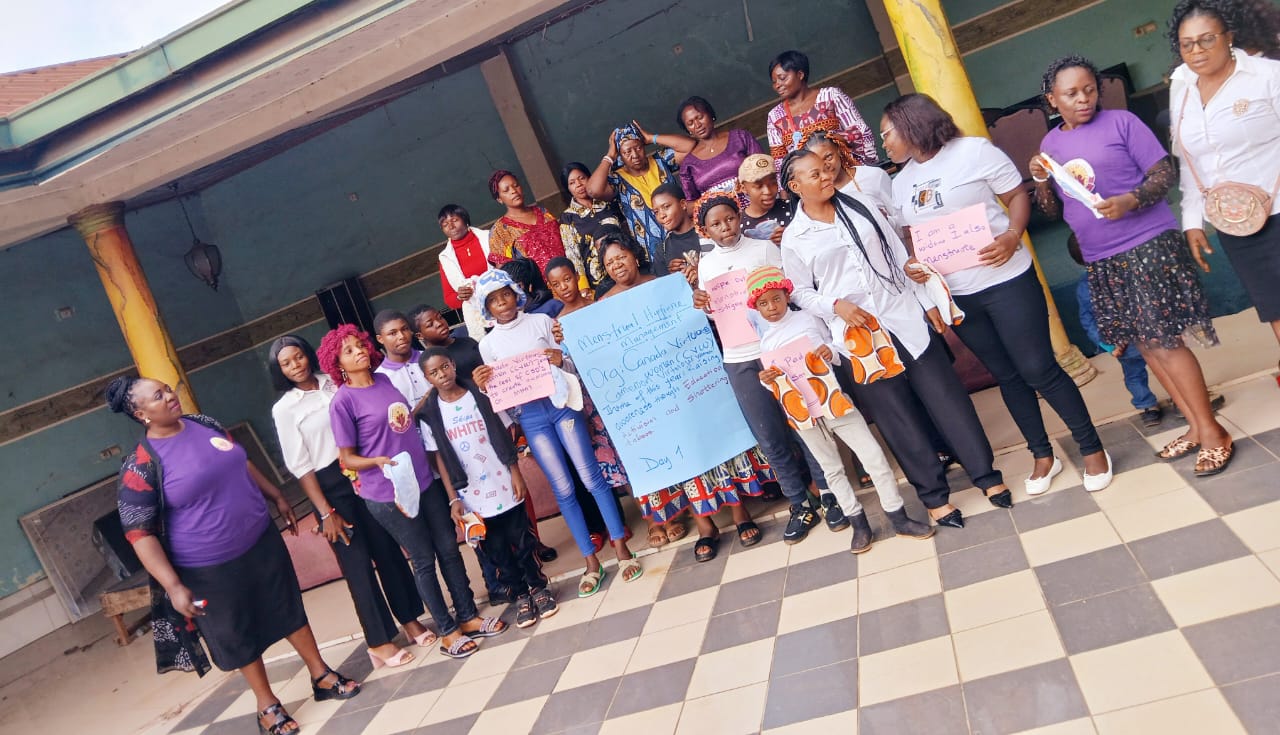
Rest is not idleness. It is repair. Inside our wellness retreats, where women are given permission to stop and be restored.
Rest has a bad reputation in communities that prize endurance. A woman who rests is called lazy. A mother who stops is called selfish. The result is a generation of women running on empty, ashamed to admit they are depleted, and convinced that needing rest is a moral failure. The reputation is not accidental. It is the product of cultures and economies that extract from women without replenishing, and that teach women to internalize the extraction as virtue. We do not accept the reputation. We work, deliberately, to restore rest to its rightful place as a necessity, not a luxury, and as an act of preservation, not of selfishness.
Our wellness retreats offer a different message: rest is not idleness. It is repair. A woman who has spent years pouring herself out for others deserves a space to be poured back into. Our retreats offer that space, with guided reflection, gentle community, and the radical permission to do nothing for a little while. The permission is the core of the retreat, and it is the hardest thing to provide, because the women who come have been trained, by life and by culture, to feel guilty for stopping. We do not simply offer the space. We offer the permission, and we reinforce it, gently and repeatedly, until the women in the room begin to believe that they are allowed to receive what we are offering.
We keep them simple. A quiet venue, a shared meal, a few hours of reflection, and the company of women who understand exhaustion without explanation. The cost is modest. The return is immeasurable. The simplicity is deliberate, because we have learned that the women we serve are often intimidated by elaborate programming and elaborate costs, and that the most restorative retreat is the one that asks the least of them. We remove every barrier we can. We provide transportation where needed. We provide childcare where possible. We provide the food, the space, and the structure, and we ask the women only to arrive and to allow themselves to be cared for.
The guided reflection is gentle and optional. We offer prompts for journaling, opportunities for silence, and the chance to share with others, but none of it is required. A woman who needs only to sit and stare at a wall for three hours is welcome to do so, and we have learned that some of our most restored participants are the ones who did nothing at all. The nothing is the point. The women who come have been doing everything, for everyone, for years. The gift we offer is the chance to do nothing, in a safe place, with no demands and no judgment, and the nothing is, for many of them, the most productive thing they have done in a long time.
One participant said she had not sat still for more than ten minutes in six years. At the retreat, she sat still for an afternoon. She told us it was the first time she had heard her own thoughts in longer than she could remember. She left restored. She came back the next year. She now helps lead the retreats. Rest, it turns out, is contagious. The story captures the essence of what we offer. We do not provide a program. We provide a permission, and the permission, once received, tends to reproduce itself in the lives of the women who receive it, as they extend the same permission to others and, crucially, to themselves.
We also address the guilt that so many women feel about resting, because the guilt is the barrier that keeps them depleted long after the retreat ends. We name the guilt, we examine its sources, and we work, in community, to loosen its grip. A woman who understands that her guilt about rest is not a personal failing but a cultural inheritance can begin to set it down, and the setting down is what allows the rest to continue beyond the retreat. We do not simply offer a day of rest. We offer a reorientation toward rest that, we hope, will sustain the women who receive it for the months and years that follow.
The community built at the retreats is one of their most lasting gifts. Women who meet in the quiet of a retreat often form connections that continue long after, becoming a network of mutual permission to rest, to set boundaries, to care for themselves as they care for others. The network is informal and powerful, and it is, we believe, one of the most effective forms of burnout prevention that exists. A woman who has a friend who will tell her to rest, and who will believe her when she says she needs to, is a woman who is far more likely to rest than one who is alone. We build the network one retreat at a time.
We have learned that the retreats are most needed by the women who are most reluctant to attend them. The women who are most depleted are often the ones who feel they cannot possibly take a day away, and the very depletion that makes the retreat essential is what makes attending feel impossible. We reach out to these women personally. We make the case, gently and persistently, that the day they cannot spare is the day that will make all the other days possible. We have watched women arrive reluctantly and leave transformed, and the transformation is the evidence that the reaching was worth it. We will keep reaching, because the women who cannot spare the day are the women the day was made for.
We also measure the impact of the retreats in the months that follow, because a retreat that produces a day of rest but no change in the rhythm of a woman's life has not fully succeeded. We follow up. We check in. We ask what shifted. The answers are often small and profound: a woman who started taking a weekly walk alone. A woman who began saying no to one obligation she could not sustain. A woman who asked for help for the first time. These small shifts are the real return on the retreat, and they are the reason we will keep offering it, refining it, and reaching the women who need it most.
If you are a woman who has not rested in longer than you can remember and who has been told, by the world or by your own voice, that rest is not for you, we want you to know that the voice is wrong. Rest is for you. It is your right, not your reward. The retreat is a beginning, not a luxury, and the permission it offers is the permission you have always deserved and were never given. Come. Sit. Be still. Be cared for. The world will not collapse while you are gone, and you will return to it more able to carry your part than you have been in a long time. You have earned this rest a thousand times over. Allow yourself, finally, to receive it.
There is a ritual we have built into the closing of every retreat that the women tell us is the moment they carry home with them, and it is the ritual of the spoken permission. Before the retreat ends, each woman turns to the woman beside her and says, simply, you are allowed to rest. The sentence is spoken in both directions, and the speaking of it, aloud, to another woman, is the moment the permission becomes real in a way that hearing it from a facilitator never quite achieves. A woman who has said the sentence to another woman has said it to herself, and the saying, we have learned, is the anchoring. The women who return to our retreats year after year tell us that they hear the sentence, in the voice of the woman who said it to them, on the nights when the guilt about rest is loudest, and the hearing is what tips the balance toward the rest their bodies are begging for.
We have also learned that the retreats produce a particular kind of friendship that is rare and valuable, the friendship of women who have rested together. There is a vulnerability in rest that accelerates intimacy. A woman who has sat in silence beside another woman, who has wept without explanation, who has been seen in her exhaustion, has been seen more deeply than years of casual acquaintance could achieve. The friendships that form at our retreats are often the most honest friendships in the women's lives, because they were built in the space where the performance was finally set down, and the setting down is the foundation of every real connection. We watch these friendships sustain women through the years between retreats, and the sustaining is the retreat's most lasting gift.
There is a detail of the retreat that we have refined over the years that we consider essential, and it is the food. We serve a meal that the women do not have to prepare, do not have to serve, and do not have to clean up after. For many of the women who attend, this is the first time in years that they have eaten a meal they did not produce, and the experience of being fed rather than feeding is, for a woman whose identity is built around providing, a form of rest so profound that it often produces the first tears of the day. We invest in the meal because we have learned that the meal is not a detail. It is a message, and the message is that a woman who has spent her life feeding others deserves, at least once, to be fed, and the being fed, in the company of women who understand what it cost her to accept it, is a rest that no amount of guided reflection could replicate.
We measure the deepest success of the retreats in the women who, having rested once with us, begin to build rest into the rhythm of their ordinary lives. A woman who takes a monthly retreat day at home, who guards a weekly hour of silence, who has learned to say no without explanation, is a woman in whom the retreat has taken root, and the taking root is the harvest we plant for. The retreat is a single day. The rooted rest is a lifetime, and the lifetime, lived at a pace that sustains rather than destroys, is the truest return on the work, and the work is the gift we are honored to give to every woman who has forgotten that rest is her right, and who is brave enough, finally, to claim it.
Written by
CAVIWO Wellness Team
Contributor to the CAVIWO community sharing stories of hope, resilience, and advocacy.