In many of the communities we serve, mental health is a subject spoken of in whispers. Our seminars bring it into the light.
In many of the communities we serve, mental health is not a topic. It is a silence. Depression is called weakness. Anxiety is called lack of faith. Trauma is called something a woman should have gotten over by now. The cost of that silence is measured in suffering that is carried alone and help that is never sought. The silence is not malicious. It is inherited, passed down through generations that had no language for what they were carrying and no permission to seek help for it. We do not blame the communities that hold the silence. We work, patiently, to give them a new language and a new permission.
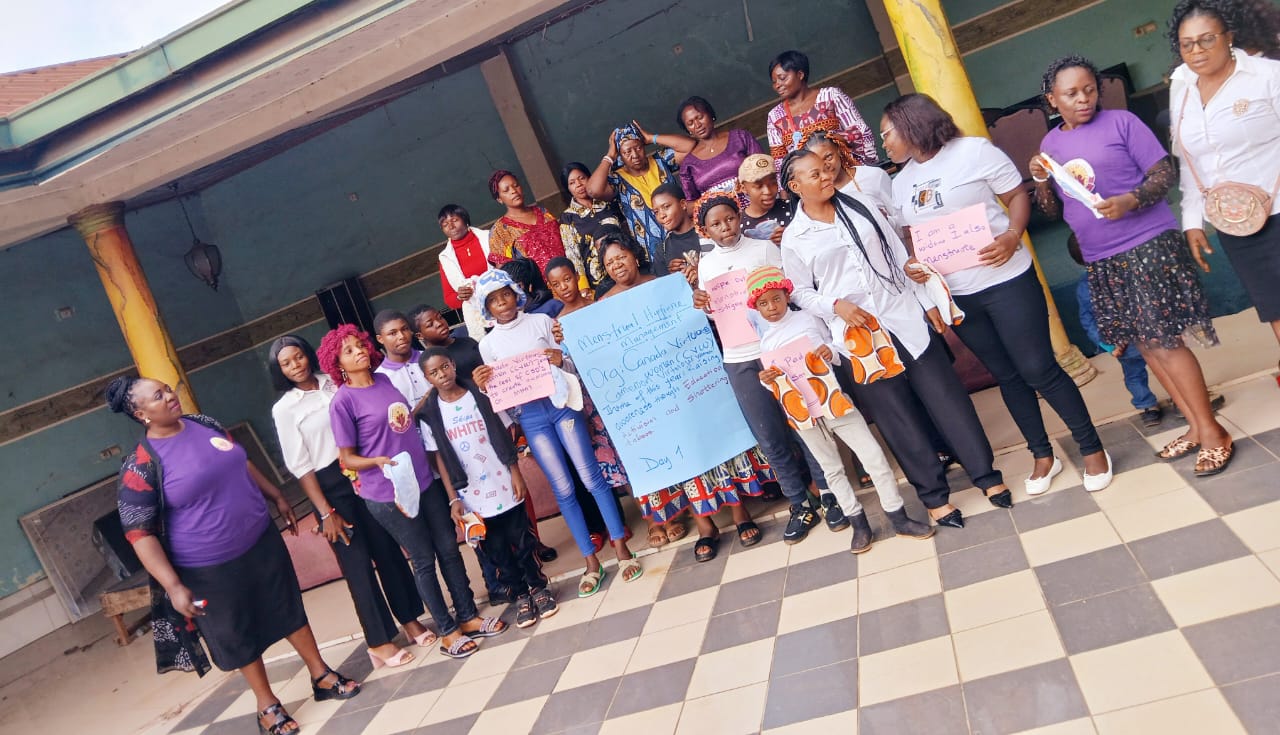
Our mental health seminars exist to break the silence. We bring the conversation into the light with respect for culture and faith, but without apology for the truth: mental health is health, and a woman who is struggling deserves care, not judgment. The balance between respect and truth is delicate, and we tend it carefully. We do not dismiss the cultural and religious frameworks that give our communities meaning. We insist, however, that those frameworks, properly understood, demand care for the suffering, not condemnation of the sufferer. The conversation we open is not against faith. It is for the flourishing that faith has always sought.
We teach coping skills, we reduce stigma, and we build bridges to professional help. We do not replace therapy. We open the door to it. A woman who has never been allowed to name her weight cannot be expected to carry it to a clinician. We help her name it first. The naming is the prerequisite for the seeking, and the seeking is the prerequisite for the healing. We are the first step, and we are proud to be the first step, because we know that without it, the women we serve would never take the second. The first step is not small. It is the step that makes every other step possible.
The seminars are designed to be accessible, not clinical. We use stories, not diagnoses. We speak in the language of the women we serve, not in the jargon of the clinic. We explain depression as a weight that does not lift, anxiety as a fear that does not quiet, trauma as a past that will not stay past. The plain language is deliberate, because the women we serve have been excluded by clinical language, and the exclusion has reinforced the silence. We translate the clinical into the common, and in the translation, we return to women the vocabulary they need to understand and describe their own suffering.
The shift is slow, but it is real. After one seminar, a woman approached us and said she had been told her whole life to pray away her sadness. She said it was the first time anyone had told her she was allowed to get help. She made an appointment that week. That is the door we are trying to open, one seminar, one conversation, one name at a time. The door is not the therapy. The door is the permission to seek the therapy, and the permission, in communities where it has been withheld, is the harder thing to provide. We provide it, and we measure our success in the women who walk through the door we have held open.
We also train community members to be mental health allies, because the seminars alone cannot reach everyone, and the women who need help most are often the least likely to attend. We equip trusted figures, the elders, the faith leaders, the community organizers, with the basic knowledge to recognize distress, to respond with compassion, and to refer to professional help. The allies become the bridge between the silent sufferer and the help she needs, and the bridge is what makes the help reachable. We cannot be in every kitchen, every church, every gathering. The allies can, and through them, our reach extends far beyond the seminar room.
We address the specific mental health challenges that the women we serve face, because mental health is not generic. A newcomer carries the trauma of displacement. A survivor of abuse carries the trauma of violation. A caregiver carries the exhaustion of unrelenting responsibility. A woman in poverty carries the chronic stress of insecurity. Each of these requires a specific response, and our seminars are tailored to the realities of the women in the room. We do not offer a one-size-fits-all mental health message. We offer a message that meets women where they are, in the specific weight they are carrying, and that specificity is what makes the message land.
We have learned that the most powerful moment in our seminars is often the first time a woman hears her own experience described aloud as a real, recognized, and treatable condition. The relief in that moment is visible. A woman who has believed she was uniquely broken discovers that her experience has a name, that the name is shared by others, and that the name comes with a path. The path is the gift. The name is the key to the path. We provide the name, and in providing it, we return to the woman the hope that her condition is not a life sentence but a starting point.
We also do the long work of changing the cultural narratives around mental health, because the seminars open the door, but the narratives determine whether the door stays open. We speak in churches, in community groups, in families, carrying the message that mental health is health, that seeking help is strength, and that no woman should suffer in silence for lack of permission. The narrative work is slow and its results are generational, but we believe in it deeply, because a community that changes its narrative around mental health is a community in which the next generation of women will not have to break the silence we are breaking now.
If you are carrying a weight you have never been allowed to name, we want you to know that the weight is real, that it has a name, and that the name comes with help. You are not weak. You are not faithless. You are not broken beyond repair. You are carrying something that human beings were not designed to carry alone, and there is no shame in setting it down with people who are trained to help you hold it. The seminar is a beginning. The help is available. The name is waiting for you to claim it. Come, and let us name the weight together, and let the naming be the first step toward the lightness that has always been your right.
There is a practice we have developed in our seminars that we have come to see as the turning point for many participants, and it is the practice of the shared inventory. We ask each woman, privately, on a card, to write down one thing she has been carrying in silence. The cards are anonymous. We read a selection aloud, and as each card is read, the room recognizes itself. The woman who wrote about the sleepless nights hears her words in a stranger's voice. The woman who wrote about the rage she cannot control hears it echoed in another's card. The recognition is not that everyone has the same struggle. It is that no one's struggle is unique, and the not-unique is the antidote to the alone. We have watched the air in the room change as the cards are read, as the collective weight of the silence becomes visible and therefore shareable, and the shareable is the beginning of the healing.
We have also learned that the women who attend our seminars and then seek professional help often face a second barrier, the barrier of a mental health system that was not built for them. The clinicians are often kind, but the system is often cold, and a woman who has just found the courage to name her weight can lose it in a waiting room that treats her like a number. We walk with women through that system. We help them make the appointment. We offer to sit in the waiting room with them. We follow up after the visit to ask how it went. The accompaniment is not therapy. It is the bridge between the seminar and the clinician, and the bridge is what ensures that the courage a woman found in our seminar is not wasted in a system that does not know how to receive it. We have learned that the naming is only the first half of the work, and the accompanying is the second, and we will not abandon a woman at the threshold of the help she has finally been allowed to seek.
There is a generational dimension to this work that we hold with particular hope. When a mother who has attended our seminar begins to speak openly about her mental health in her home, her children learn, by example, that the silence is not inevitable. A daughter who hears her mother name her anxiety without shame inherits a permission that her mother never had, and the inheritance is the beginning of a generational shift that we will not live to see completed but that we plant with every seminar we run. We measure the deepest success of this work not in the women who heal but in the children who will never have to break the silence, because the silence was broken for them by a mother who learned, in a room full of women, that her weight had a name and that the name was nothing to be ashamed of.
We will keep naming the weight, one seminar, one card, one accompaniment at a time, because the naming is the beginning of the freedom, and the freedom is the right of every woman who has been told to carry her suffering in silence. The work is slow, the stigma is deep, and the systems are imperfect, but the women who find their names in our seminars and their help beyond them are the proof that the work works, and the proof is what sustains us through every season of this most necessary, most patient, most hopeful work.
Written by
CAVIWO Wellness Team
Contributor to the CAVIWO community sharing stories of hope, resilience, and advocacy.