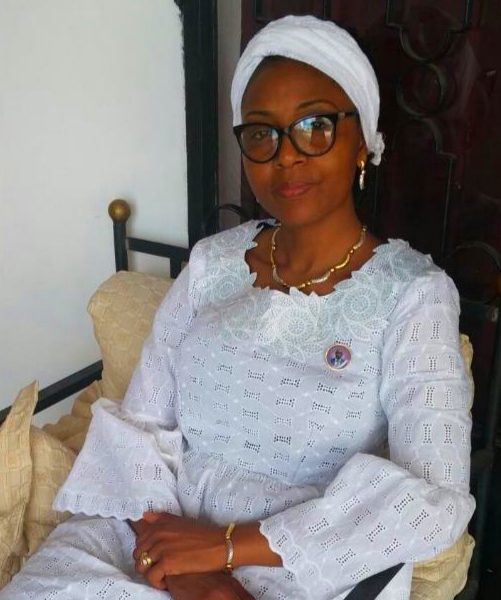
I lost my husband of 29 years at the beginning of 2018 through a ghastly car accident in Cameroon. As always, the grieving woman gets the harshest treatment. CAVIWO gave me a second home and renewed hope.
I will use this opportunity to tell you a personal story, one that still brings tears to my eyes each time I revisit it, but one that I now tell with gratitude rather than despair. I lost my husband of 29 years at the beginning of 2018 through a ghastly car accident in Cameroon. We had built a life together across two countries, raised children who made us proud, and weathered storms that would have broken a lesser bond. He was my partner, my confidant, and the quiet anchor of our family. In a single afternoon, on an ordinary road, that anchor was gone.
As always, the grieving woman gets the harshest treatment from the in-laws. I was not spared. In many of the communities we come from, the death of a husband is not only a personal loss but a social verdict. Within days of the funeral, accusations began. I was questioned about property I had never touched, about money I had never seen, about decisions my husband had made without me. The very family that had welcomed me for nearly three decades now looked at me as a stranger, and worse, as a suspect. I was stripped of dignity at the very moment I most needed it.
The traditions that surround widowhood in parts of West Africa are not abstract to me. They are the air I breathed during those weeks. I was expected to prove my innocence of a death I had no part in, to mourn in ways prescribed by people who did not know my grief, and to accept without protest the loss of home, standing, and voice that custom demanded. Every woman in my family had carried some version of this weight. I had watched my own mother carry it. I never imagined I would carry it too, and so soon.
Coming back to Canada broken and grieving, I was a shadow of the woman I had been. I could not sleep. I could not eat without forcing myself. I smiled for my children and wept in every quiet room. The country that had become my second home felt suddenly foreign, as though the ground beneath me had shifted and I could not find my footing on it. I went through the motions of living, but I was not living. I was surviving, and barely.
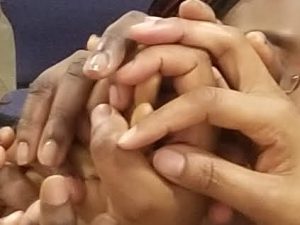
It was in that season that I was introduced to Canada Virtuous Women, known to so many of us simply as CAVIWO. A friend, herself a member, noticed the weight I was carrying and refused to let me carry it alone. She brought me to a gathering, and from the first evening I understood that this was different. No one asked me to explain myself. No one demanded proof of my grief or my innocence. They simply wrapped their arms around me, literally and figuratively, and told me I was welcome, that I was safe, and that I was not alone.
They provided grief support that was patient and unhurried. There was no timeline placed on my healing, no expectation that I would be fine by a certain date. The women of CAVIWO understood that grief is not a project to be completed but a passage to be walked, and they walked it with me. Week after week, I sat in circles where other women shared their own losses, and slowly I began to understand that my pain, while uniquely mine, was not mine alone. There was a sisterhood in suffering, and within that sisterhood there was healing.
They helped me regain my self-worth, which had been the first casualty of the accusations and the traditions. When you are told, again and again, that you are less than, you begin to believe it. CAVIWO interrupted that lie. They saw me as a whole person, a mother, a professional, a woman of faith, a survivor, and they reflected that wholeness back to me until I could see it myself. They did not fix me. They helped me remember who I was.
They gave me a platform to uplift other women, and that, more than anything, restored me. When I began to share my story and to support women walking through their own valleys, I discovered that the very pain that had nearly destroyed me had become a bridge to others. The widow who had been accused found herself believed. The woman who had been isolated found herself surrounded. I became, through CAVIWO, the very thing I had needed and not found in my darkest weeks.
Today, I stand as a testament that God uses organizations like CAVIWO to turn tears into dancing. I do not say that lightly. I know what it is to weep until there are no tears left. I also know what it is to laugh again, to hope again, to plan for a future I once could not imagine. The transformation was not instant, and it was not easy, but it was real, and it was made possible by women who decided that no grieving woman should ever face what I faced alone.
If you are reading this and you are in a season of loss, I want you to know something I needed to hear in mine. You are not forgotten. You are not guilty of the accusations that grief and custom have placed on you. You are not too broken to be restored. There is a community that will hold you, a sisterhood that will believe you, and a future that is still possible for you. I am living proof.
And if you are reading this and you have the means to support this work, please understand what your generosity does. It does not simply fund programs. It rebuilds lives. It restores dignity. It turns a widow's accusation into a woman's testimony. Every dollar that reaches CAVIWO reaches a woman like me at the moment she most needs to be reached. I am Francisca, and I am a story of triumph, not because I was strong enough on my own, but because I was never left to be strong alone.
I want to speak honestly about the months that followed my return to Canada, because I do not want anyone to think the healing was quick or that the support I received was a single event. It was a long, uneven road. There were mornings I could not get out of bed. There were nights I woke convinced I heard his voice in the hallway. The women of CAVIWO did not rush me through those mornings or those nights. They called. They visited. They sat with me in silence when I had no words, and they waited, without complaint, until the words returned. That patience is the rarest form of love, and it is the form I needed most.
Slowly, the grief began to share the room with something else. Not happiness, not at first, but a kind of purpose. I began to attend the weekly gatherings not only to be held but to hold. I noticed newer women arriving with the same hollow look I had carried, and I recognized it the way only a fellow sufferer can. I started to sit beside them. I started to listen the way I had been listened to. I did not have answers. I had presence, and I had learned, through my own healing, that presence is often the only answer that matters. The circle that had saved me became the circle I now helped sustain.
I also began to use my professional skills again. Before the accident, I had worked in administration and had a gift for organizing people and resources. CAVIWO saw that gift even when I could not see it in myself, and they invited me to help coordinate the very support groups that had carried me. The invitation was itself a restoration. To be asked to contribute, after months of only receiving, reminded me that I was not a burden to be managed but a person with something to offer. The work gave structure to my days and meaning to my grief, and the meaning is what eventually turned the grief from a weight into a foundation.
There is a moment I return to often in my memory. It was about a year after my husband's death, at a CAVIWO gathering, when a woman newer than me shared a story that mirrored my own almost exactly. She spoke of loss, of accusation, of the shame that follows a widow in communities that blame her for the death she did not cause. When she finished, the room was quiet, and then, without planning to, I spoke. I told her she was believed. I told her she was not alone. I told her that the road ahead was long but that she would not walk it by herself. The words came from a place deeper than thought. They came from the place where my own healing had taken root, and in speaking them, I understood that my suffering had been transformed into a source of strength for another. That is the miracle CAVIWO makes possible, and it is the reason I will never stop telling my story.
I am often asked what I would say to a woman who is where I was in 2018, broken, accused, and barely holding on. I would say this. The pain you are feeling is not a verdict on your worth. The accusations you are hearing are not the truth about who you are. The isolation that surrounds you is not permanent, even though it feels eternal. There are women, in this country and beyond, who have walked the road you are on, who have survived what you are surviving, and who are waiting, right now, to walk it with you. You do not have to find them alone. You only have to reach, and they will reach back. I know, because I reached, and they reached back to me.
I would also say this to the families and communities that surround a grieving woman. Do not look away. Do not let tradition or suspicion turn you against a woman who has already lost the person she loved most. The way a community treats its grieving women is the measure of that community's soul, and the measure is taken in the moments no one is watching. Choose, in those moments, to be the hand that holds rather than the hand that takes. Choose to believe rather than to accuse. Choose to stay rather than to abandon. The woman you stand beside in her grief may one day stand beside you in yours, and the standing is what makes us human.
I end where I began, with gratitude. Gratitude for my husband, whose memory I carry with love rather than only sorrow. Gratitude for the women of CAVIWO, who refused to let me disappear into my grief. Gratitude for the God who, I believe, placed each of them in my path at the exact moment I needed them. And gratitude for you, whoever you are, reading this story. Your attention is itself a form of solidarity, and your solidarity, whether through prayer, through giving, or through simply refusing to look away, is what allows stories like mine to end in triumph rather than in despair. I am Francisca. I am a widow who was accused and then restored. And I am, by the grace of God and the love of a sisterhood, still here.
I have learned, in the years since, that healing is not a line you cross but a road you walk, and that the road has seasons. There are seasons when the grief is light and I can speak of my husband with laughter. There are seasons when the grief is heavy and I cannot speak of him at all. The women of CAVIWO taught me to honor both seasons, to neither rush the heavy ones nor cling to the light ones, and to trust that the road, walked with company, leads somewhere good even when the view is obscured.
I have also learned that the work of rebuilding is not only emotional but practical. CAVIWO helped me navigate the paperwork of a death that occurred abroad, the insurance claims, the estate questions, the legal status that a widow must suddenly understand. None of it was glamorous, and all of it was overwhelming, and I would have drowned in it without the women who sat beside me and translated the bureaucracy into steps I could take. The practical support was, in its way, as healing as the emotional support, because it returned to me the sense that I could manage my own life, that the chaos was finite and navigable.
I think often of the other women in my circle, each carrying a different version of my story. One lost her husband to illness. One to violence. One to a disappearance that was never explained. We do not compare our griefs. We share them, and in the sharing, each of us discovers that the weight we thought was ours alone is a weight that many carry, and that the carrying, together, is lighter than the carrying alone. The circle is the place where the weight is redistributed, and the redistribution is what makes the road walkable.
There is a question I am sometimes asked that I want to address here. People ask whether I have forgiven the family that accused me. I answer honestly. Forgiveness is a word I have come to use carefully. I do not carry hatred. I have released the need for the accusations to be retracted. But I do not pretend that what was done to me was acceptable, and I do not believe that healing requires me to call it so. What I have found is something more honest than forgiveness and more durable than anger. I have found the freedom to live fully without needing anything from those who wounded me, and that freedom is enough.
I want to close with a word for the women who are where I was and who have not yet found their circle. The circle exists. The women are waiting. The road is long, but it is not endless, and you do not have to walk it in silence. The story I have told here is not exceptional. It is the story of hundreds of women who have been carried by this sisterhood, and it can be your story too. Reach out. Let yourself be held. The triumph I speak of is not mine alone. It is the triumph of every woman who refuses, with the help of others, to be defined by what was done to her.
I have also learned, in the years since, that the work of healing includes the work of helping other women heal, and that the two are inseparable. Every time I sit with a woman who is where I was, I heal a little more myself, because the sharing of the story loosens its hold on me and turns it into a bridge instead of a wall. The women of CAVIWO taught me that our stories are not meant to be hoarded but to be offered, and that the offering is how we turn our pain into purpose and our survival into a light for those still searching in the dark.
There is a future I now dare to imagine that I could not imagine in 2018. It is a future in which I continue to serve, to share, and to stand beside the women who follow me into this sisterhood. It is a future in which my husband's memory is carried with love and not only with grief. It is a future in which the triumph I have spoken of is not the end of my story but the middle of it, and in which the chapters still to come are written in the company of women who refused, and who will always refuse, to let me walk alone. That future is the gift CAVIWO gave me, and it is the gift I will spend my life giving in return.
Written by
Francisca Walters
Contributor to the CAVIWO community sharing stories of hope, resilience, and advocacy.