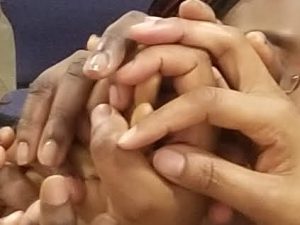

Emergency aid is not a handout. It is a hand that keeps a family housed, fed, and held together through a crisis. Inside our emergency food and rental aid.
Emergency aid is often spoken of with embarrassment, as though needing help is a failure. We reject that framing entirely. A family facing a sudden crisis, a job loss, an illness, an unexpected bill, is not failing. They are being failed by systems that offer no margin, and a community that steps in is not doing charity. It is doing justice. The reframing is not rhetorical. It is foundational to how we deliver the aid, because a woman who receives aid wrapped in shame will not receive it fully, and the not receiving fully is what makes the aid less effective. We deliver aid wrapped in dignity, and the dignity is part of the aid.
Our emergency food and rental aid provides practical assistance for families facing immediate housing or food insecurity. The aid is modest and it is timely. It covers the gap between a crisis and a recovery, the month of rent that keeps a family housed, the groceries that keep a refrigerator full while a mother finds her footing. The gap is where families fall, and the filling of the gap is what keeps them from falling. We do not pretend the aid solves the underlying problems. We hold the family steady through the crisis, and the holding is what allows them to address the underlying problems from a place of stability rather than freefall.
We do not attach shame to the help. We do not make a woman prove her desperation. We trust her, because the women who come to us have already proven their resilience a thousand times over. Our job is to make sure that resilience is not the thing that breaks them. The trust is not naive. We verify what we can, we steward our resources carefully, and we follow up to ensure the aid achieved its purpose. But we do not interrogate. We do not require a woman to perform her poverty to earn our help. We believe her, and the believing is part of the dignity, and the dignity is part of the aid.
The speed of the aid matters as much as the amount. A family facing eviction does not need help in six weeks. They need help this week, and we have built our processes to deliver in that window. The speed requires reserves, relationships with landlords and grocers, and a willingness to act before every form is perfect. We have learned that the perfection of the paperwork is the enemy of the family in crisis, and we have chosen, deliberately, to prioritize the family over the paperwork, knowing that the stewardship of our resources is served by the speed as much as by the precision. A dollar that arrives on time does more good than two dollars that arrive too late.
Last year we distributed over one hundred emergency aid packages. Behind each was a family that stayed housed, stayed fed, and stayed together through a month that could have undone them. That is what your generosity does. It keeps families held together when everything else is pulling apart. The packages are modest in cost and immeasurable in value, and the value is not only in the rent paid or the food purchased. It is in the message the aid sends, which is that the family is not alone, that the community sees them, and that they are worth the help. The message is the deeper aid, and it outlasts the rent and the food.
We also connect the families we help to the longer-term supports that can prevent the next crisis. Emergency aid that does not lead to stability is aid that will be needed again, and we work to ensure that the families we serve do not return to the same crisis in a few months. We enroll them, where appropriate, in our capacity-building programs, our food assistance, our support circles, and the enrollment is what turns a single intervention into a sustained change. The aid is the door. The longer-term support is the path, and we walk the path with the families we serve, not only through the crisis but beyond it.
We have learned that the families who receive emergency aid often become the most generous supporters of the next family in crisis, once they have recovered. A woman who has been held through her hardest month understands, with a clarity no donor appeal can convey, what the aid meant, and she gives, when she can, with a gratitude that is itself a form of aid to the community. The cycle of giving and receiving is the deepest sustainability of this work, and we nurture it by treating every recipient as a future giver, because we have learned that most of them will be, and the treating is what makes the becoming possible.
The dignity we deliver is not only in the absence of shame. It is in the presence of respect. We listen to the family's situation. We ask what they need, rather than assuming. We honor their preferences where we can, in the food we provide, in the timing of the help, in the way we deliver it. A family that is consulted about their own aid is a family that retains its agency in a moment that threatens to strip it, and the retention of agency is, for many families, the most important thing the aid provides. We do not deliver aid to passive recipients. We deliver aid in partnership with active families, and the partnership is the dignity.
One mother, after receiving aid that kept her family housed through a job loss, returned six months later, employed and stable, to volunteer in the program that had helped her. She told us she needed to give back what she had been given, and that the giving was how she finished the healing. Her return is the full circle we hope for, and it is the circle that makes the work sustainable. A family that is held through a crisis and then returns to hold the next family is a family that has been transformed from a recipient into a resource, and the transformation is the deepest return on the aid.
If you are facing a crisis that threatens your housing or your food and you have been telling yourself that you should be able to handle it alone, we want you to know that the telling is a voice you do not have to obey. Needing help is not a failure. It is a season, and seasons end. The aid is available, the dignity is guaranteed, and the community is ready to stand with you through the month that feels impossible. Reach out. Let us hold you steady. The crisis does not define you, and it does not have to undo you. There is a hand here, and it is reaching for yours.
There is a detail of our emergency aid that we have refined over years of practice and that we consider essential, and it is the home visit. When a family requests rental aid, we do not simply transfer funds. We visit, if the family is willing, because the visit accomplishes three things that a transfer cannot. It confirms the need with eyes that care rather than eyes that suspect. It builds a relationship that makes the longer-term support possible. And it delivers, in the simple act of sitting in a family's living room, the message that the community sees them as people rather than as cases. The home visit is more labor than a transfer, and it is worth every minute, because a family that has been visited is a family that has been met, and the being met is what makes the aid effective in ways that money alone could never achieve.
We have also learned that the moment of crisis is often the moment a family is most open to the longer-term support that can prevent the next crisis, and we have built our emergency aid to capitalize on that openness. A family that has just been saved from eviction is, in our experience, far more willing to enroll in financial literacy, in job training, in a support circle than they were a month before the crisis, because the crisis has made the need undeniable. We offer the longer-term support in the same conversation as the emergency aid, not as a condition but as an invitation, and the invitation, offered at the moment of greatest openness, is accepted more often than any other timing could achieve. The emergency aid is the door. The invitation, offered at the door, is the path, and the path is what turns a single month of help into a lifetime of stability.
There is a particular kind of emergency aid we provide that is rarely discussed and that we consider among our most important, and it is the aid that covers a funeral. When a family loses a member and cannot afford the burial, the grief is compounded by a financial crisis that the world does not see, because funerals are private and the cost is invisible. We have stood with families who were choosing between a coffin and rent, and we have covered the cost so they did not have to choose. The aid is not in our brochures, because it is not the kind of thing a family plans to need, but it is in our budget, because grief should never be compounded by the inability to bury a loved one with dignity. We provide it quietly, respectfully, and without fanfare, because the families who need it are already carrying more than any family should, and the least we can do is ensure that the carrying does not include the cost of a goodbye.
We measure the success of this work in the families who stay housed, the children who stay fed, the parents who stay standing through a month that could have broken them, and the women who return, once they are stable, to stand beside the next family in crisis. The measurement is in lives held together, and the lives are what we work for, because we believe that a community is measured by how it responds when a family is falling, and we are determined, with every package of aid and every home visit, to be a community that catches rather than watches. We will keep catching, one family, one month of rent, one bag of groceries at a time, for as long as there are families in freefall, because the catching is the justice, and the justice is the work we are honored to do.
Written by
CAVIWO Care Team
Contributor to the CAVIWO community sharing stories of hope, resilience, and advocacy.