There is a particular healing that happens only among those who have been there. Inside our confidential survivor peer groups.
There is a kind of understanding that cannot be taught. It can only be shared. When a woman who has survived abuse sits in a room with others who have survived it too, something releases that no therapist, however skilled, can fully reach. The room knows. The room believes. The room does not require proof. This shared knowing is the foundation of our survivor peer groups, and it is the reason they work in ways that no professional intervention, however valuable, can replicate. We do not replace therapy. We offer something therapy cannot, the healing that comes from being fully understood by people who have lived what you have lived.
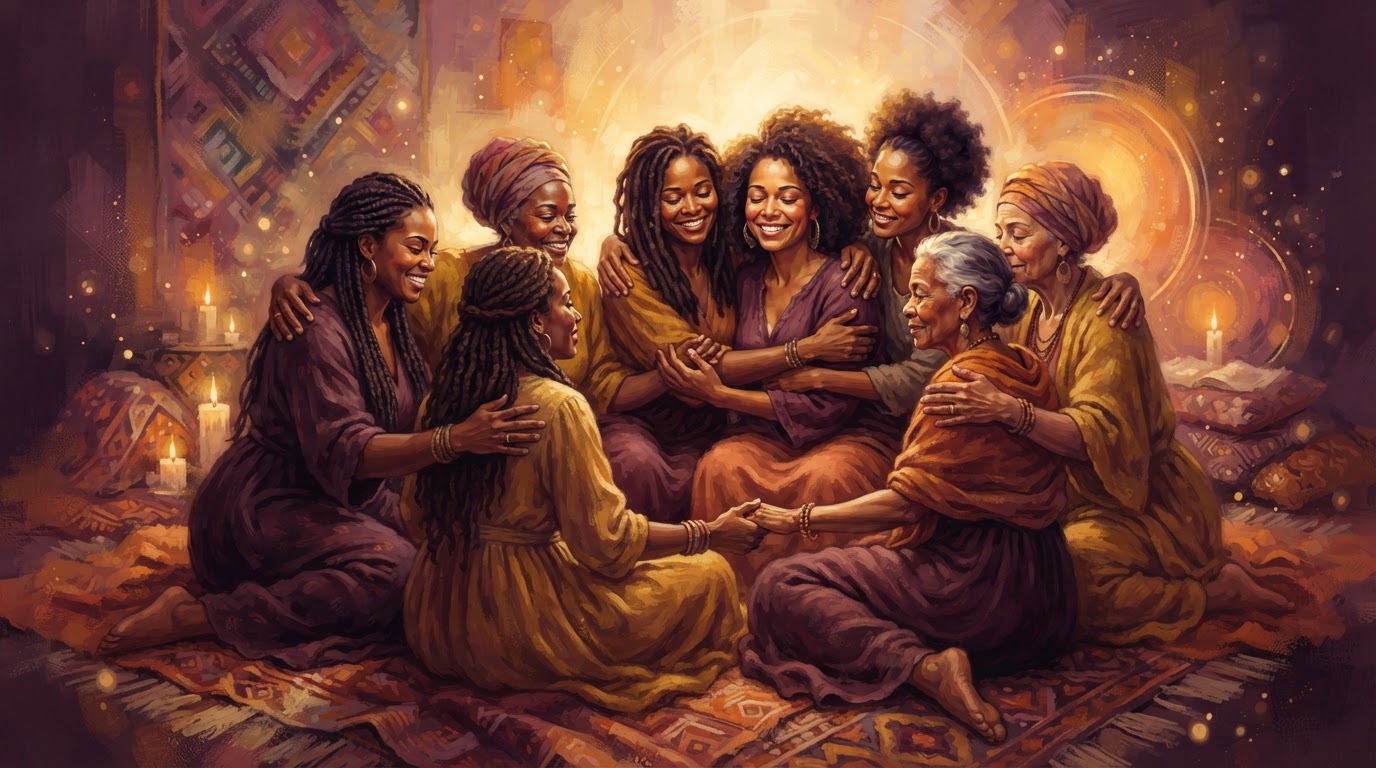
Our survivor peer groups are confidential, facilitated, and built on that shared knowing. We are careful, trauma-informed, and clear about boundaries. We are not a substitute for clinical care. But for the long work of rebuilding a self after it has been broken, a circle of people who have been there is its own medicine. The medicine is not in advice. It is in presence. A woman who has been told, by her abuser and often by the world, that she is alone discovers, in the circle, that she is one of many, and that the many is a sisterhood forged in survival.
The facilitation is essential, and we invest in it heavily. Our facilitators are trained in trauma-informed practice, in group dynamics, and in the specific challenges of working with survivors. They are not there to lead. They are there to protect the space, to ensure that every voice is welcomed and none is silenced, and to hold the boundaries that make the sharing safe. A poorly facilitated survivor group can do harm. A well-facilitated one can save lives, and the difference is almost entirely in the quality of the facilitation. We will not compromise on it.
Women come to the circle afraid to speak. They leave having spoken. They come believing they are the only one. They leave knowing they are one of many, and that many is a sisterhood forged in survival. The transformation happens not through any single moment but through the accumulation of weeks, of sitting with women who do not flinch at your story, who do not require you to minimize it, who meet your truth with their own. That accumulation rebuilds, slowly, the trust in oneself and in others that abuse destroys. The rebuilding is the work, and the circle is where it happens.
We are honest about the limits of the circle. It is not therapy. It does not replace the clinical care that many survivors need. We are clear about this with every participant, and we maintain warm referral pathways to therapists, counselors, and psychiatrists for women whose needs exceed what a peer group can offer. The honesty about limits is what makes the circle safe. A woman who knows what the circle is and is not can use it well, and can seek the additional help she needs without confusion or shame. We are a part of the healing, not the whole of it, and we say so plainly.
One participant said the circle was the first place she had ever told her whole story out loud. She wept. The women around her did not look away. That, she said, was the beginning of her healing. The not looking away is the heart of the circle. So many survivors have spent years being looked away from, by family, by friends, by systems that preferred not to know. The circle reverses that pattern. Here, the looking is the offering. Here, to be fully seen, in all the pain of your story, and to be met with eyes that stay, is to begin to believe that your story is bearable, because it is being borne by others alongside you.
We also build community beyond the meetings. Survivors who have found healing in the circle often become its most devoted members, returning not only for their own support but to offer it to newcomers. The woman who was once afraid to speak becomes the one who welcomes the woman who is now afraid, and the welcome, from someone who has been where she is, is more powerful than any professional greeting could be. The circle is self-renewing in this way, and the renewal is the evidence that the model works. A healing that produces healers is a healing that lasts.
We have learned that the circle changes not only the women in it but the communities they return to. A woman who has been heard, believed, and supported carries a different posture into every relationship that follows. She is more likely to recognize abuse in others, to speak up, to offer the same believing ear she received. The healing radiates outward, from the circle into families, workplaces, and neighborhoods, and the radiation is, we believe, one of the most effective forms of prevention that exists. A community in which survivors are heard is a community in which abuse is harder to hide.
The confidentiality of the circle is absolute and non-negotiable. What is shared in the room stays in the room. We do not reference, we do not hint, we do not discuss participants outside the group, even with one another, beyond what is necessary for care. This discipline of silence is what allows the speaking to happen, and we guard it fiercely. A survivor who trusts that her story will go no further will share what she has never shared. A survivor who fears even a whisper will not. The silence is the condition of the speech, and we hold the silence as sacredly as we hold the speech.
If you are a survivor reading this and wondering whether a circle like this could help you, we want you to know that the room is ready, the women are kind, and the door is open. You will not be asked to speak before you are ready. You will not be required to prove anything. You will simply be welcomed, by women who understand without explanation, into a space where your story is believed and your healing is possible. You have carried this far enough alone. There is a circle, and there is a chair, and there are women who have been where you are, waiting to walk with you toward where you are going. Come. You are not alone. You never were.
We have learned that the circle, once established, develops its own rhythm and its own wisdom, and that the women in it begin to carry each other in ways that extend far beyond the meeting room. A survivor who is having a hard week receives a call from another survivor who recognized the signs. A woman who is facing a court date is accompanied by a sister from the circle who has faced one before. The accompaniment is not organized by us. It emerges from the relationships the circle builds, and the emergence is the sign that the circle has become a community rather than a program, and a community, we have learned, is what sustains a survivor through the long years that follow the initial healing, because the healing is not a single event but a long road, and a long road is best walked with sisters who know its turns.
There is a particular dynamic we have observed in the circle that we have come to call the mirror, and it is one of the most powerful forces in the healing it produces. A woman who has spent years believing her experience was unique, and therefore somehow her fault, hears another woman describe an experience that mirrors her own, and in the mirroring, the fault is redistributed where it belongs, onto the abuser and the culture that enabled him. The redistribution is not intellectual. It is visceral, and it happens in the body, in the sudden release of a tension the woman did not know she was holding, because the mirror has shown her that what was done to her was not a response to who she is but a pattern that repeats across women, and the pattern, once seen in another, can finally be named as what it was, and the naming is the beginning of the freedom from the self-blame that the abuse installed and the circle, week by week, dismantles.
We measure the fruit of the circle in the women who no longer need it, because the woman who no longer needs it is the woman who has healed enough to stand, and the standing is the goal. We do not measure success in attendance. We measure it in the gradual, quiet departure of women who have done the work and are ready to carry it into the world without the weekly support of the room. The departure is not an ending. It is a graduation, and the graduate, we have learned, almost always returns, not for herself but for the next woman, because the circle that healed her has become a circle she cannot fully leave, and the not leaving is the proof that the healing took, and that the sisterhood forged in the room has become a sisterhood carried in the world, one survivor, one mirror, one returned sister at a time.
Written by
CAVIWO Support Team
Contributor to the CAVIWO community sharing stories of hope, resilience, and advocacy.