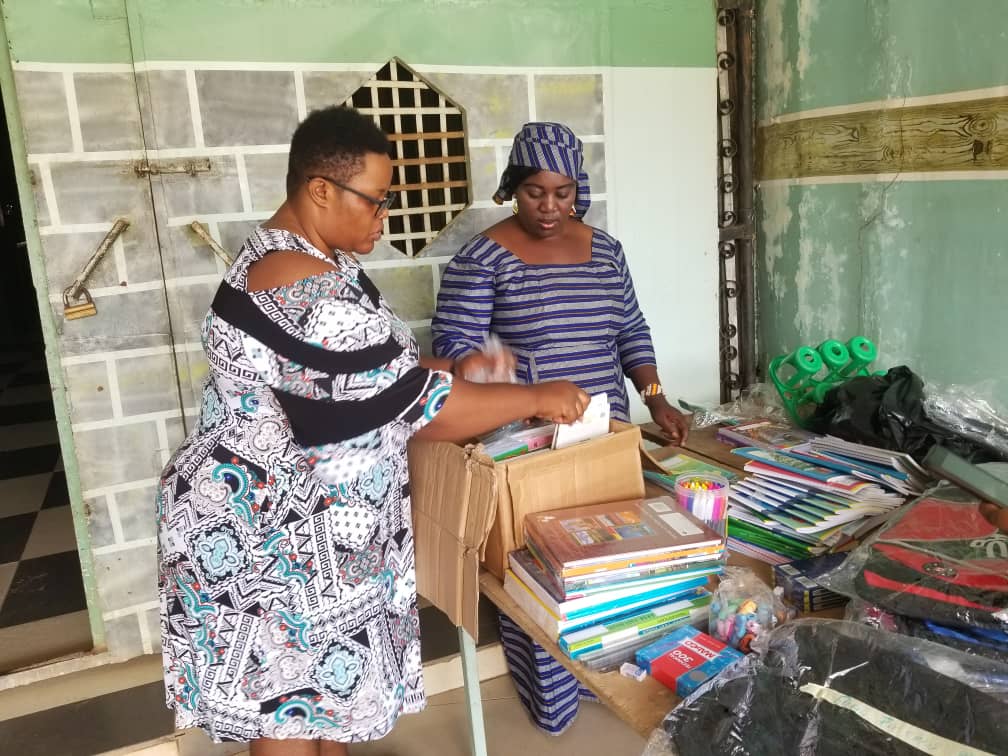
For many women we serve, education was interrupted by hardship. Our programs create second chances through accessible, practical learning.
Education is rarely described as a second chance, but for the women we serve, it often is. A girl who left school at fourteen because of conflict. A woman whose training was cut short by a husband's death. A newcomer whose credentials mean nothing in a new country. Each carries an interruption, and each deserves a way back. The interruption is not the end of the story, though it often feels like one. Our work is to reopen the story, to hand a woman the pen again, and to sit beside her while she writes the next chapter that the interruption tried to deny her.
The interruptions take many forms, and we have learned to honor each one. A woman who left school because of war carries a different wound than a woman who left because of poverty, and a woman whose credentials were rendered meaningless by a border carries a different frustration than a woman who never had the chance to earn any. We do not flatten these experiences into a single narrative. We listen to each woman's interruption, and we help her find the specific path back that fits her specific story. The paths differ. The dignity we offer on each one is the same.
Our Education and Training Programs create those ways back. We offer language classes for newcomers, vocational courses for women seeking employment, digital skills for those re-entering a changed workforce, and scholarship guidance for families who never imagined higher education was within reach. The offerings are practical, because the women we serve do not have time for abstraction. They need credentials that open doors, skills that earn income, and knowledge that navigates systems. We provide all three, and we provide them in formats that fit the complicated lives our students are already living.
The classrooms are unglamorous and the hours are often borrowed around work and childcare. But what happens in them is extraordinary. A woman who once believed her learning was over discovers it has simply been paused. The pause ends, and she begins again. The beginning again is the miracle of this work, and it never stops moving us. A woman who has been told, by life, that her chapter is closed walks into a classroom and discovers that the book is still open, that there are pages she has not yet written, and that the pen is still in her hand if she will pick it up.
We design our programs for the realities of adult learners. We offer evening and weekend sessions. We provide childcare where we can. We move at a pace that respects the fact that our students are also mothers, workers, and caregivers. We do not penalize the complications of their lives. We accommodate them, because we have learned that a program that demands a woman set down her other responsibilities is a program that excludes the women who need it most. Flexibility is not a convenience in our classrooms. It is a commitment, and it is the reason so many of our students are able to finish what they start.
One participant, a mother of four, completed a digital skills course and found remote work she could do from home. She told us the certificate on her wall was the first diploma she had ever earned. She is forty-three. It is not too late. It is never too late. Her story is not exceptional. It is representative of a truth we have witnessed repeatedly, that the capacity to learn does not expire with age, and that the women who were denied education earlier in life are often the most determined students when the chance finally comes. Their determination is a resource no traditional classroom knows how to value. We have learned to build our programs around it.
We also address the emotional dimension of returning to education, which is often the hardest part. A woman who left school decades ago carries the shame of the leaving, the fear that she has forgotten how to learn, and the anxiety of being the oldest in the room. We name these fears openly in our first sessions, and we dissolve them in community. The woman who weeps on the first day because she is sure she cannot do this is the same woman who presents her final project with pride on the last. The transformation is not in her ability. It is in her belief, and the belief is built by the community of women who learn alongside her and refuse to let her doubt herself alone.
The credentialing matters, and we are honest about that. A certificate that opens a door is worth more than a certificate that decorates a wall. We align our programs with real labor market needs, so that the skills our students acquire are the skills employers are seeking. We partner with local employers to understand what they need, and we adjust our curricula accordingly. The result is a program that does not merely educate but employs, and the women who complete it leave not only with knowledge but with a realistic path to use it. Knowledge without opportunity is a half-gift. We are committed to the whole.
We have also learned that education, for the women we serve, is rarely only about themselves. A mother who returns to school models for her children a lesson no lecture can teach, that learning is a lifelong pursuit and that circumstances do not have the final word on a person's future. We have watched children of our students develop a new respect for education, and a new belief in their own capacity, simply by watching their mother study. The classroom educates one woman. The example educates a generation. That multiplier effect is the deepest return on this work, and it is the reason we will never stop offering second chances.
If you are a woman who believes her educational story ended too soon, we want you to know that we believe it did not. The chapter you thought was the last is not. There is a classroom, and there is a chair, and there are women who have walked the same road you are considering, who are ready to walk it with you. The second chance is not a gift we give. It is a door we hold open. The walking through is yours. We will be beside you for every step, and we will be there, applauding, when you cross the threshold you once thought was closed forever.
We have learned that the women who return to education through our programs are often the most determined students any classroom has ever seen, because they know, from the interruption of their earlier education, exactly what it costs to be without it. They do not take the classroom for granted. They treat every session as the privilege it is, and the privilege, felt deeply, produces a focus that no requirement can manufacture. We design our programs for these women, and the designing is what makes the programs work for them in a way that ordinary classrooms often do not.
There is a moment in every cohort that we have come to cherish. It is the moment when a woman who has been quiet for weeks finally speaks, not to answer a question but to share an insight, and the room recognizes, in the insight, a mind that has been waiting for exactly this chance to reveal itself. The moment is quiet, and it is profound, and it is the reason we do this work. A mind that has been waiting is a terrible thing to waste, and we exist to ensure that the minds that have waited longest are the ones that finally get the chance to speak.
We have also learned that the women who return to education through our programs often become the most passionate advocates for education in their communities, because they know, from the inside, what it costs to be without it and what it gives to have it. We nurture that advocacy, because we believe that the most effective champions of education are the women whose lives were changed by it, and that their voices, raised in their communities, will reach families we never could. The advocacy is the multiplier of the education, and the multiplier is what turns a single classroom into a movement that extends far beyond any room we could ever rent.
There is a graduation we hold at the end of each cohort that is unlike any graduation most of our women have ever attended. There are no robes and no grand stages. There is a room full of sisters, a certificate, and the reading of each woman's name. The reading of the name is the heart of the ceremony, because for many of our women it is the first time their name has been called in celebration rather than in obligation, and the first time a room has stood for them rather than expected something of them. We stand for every name, and we cheer for every woman, and we mark the moment because we know that the moment will be remembered long after the certificate has been framed, and that the memory of being celebrated will sustain a woman through the next challenge she faces, and the one after that, and the one after that, for as long as she continues to learn and to grow.
Written by
CAVIWO Education Team
Contributor to the CAVIWO community sharing stories of hope, resilience, and advocacy.