From Ottawa to Cameroon, Nigeria, Kenya, and Tanzania, our weekly gatherings are the thread that holds a global sisterhood together.
When the first prayer circle gathered in Ottawa, none of us imagined it would one day meet in Limbe, Lagos, Nairobi, and Arusha. But the impulse that brought the first women together is the same one that draws women together in every branch: the need to pray, to be known, and to belong. The geography changed. The need did not. A woman in Cameroon and a woman in Canada may live under different skies, speak different languages, and face different challenges, but the ache for community, for a place where she is seen and supported, is the same in both. That shared ache is the bridge our sisterhood is built on.
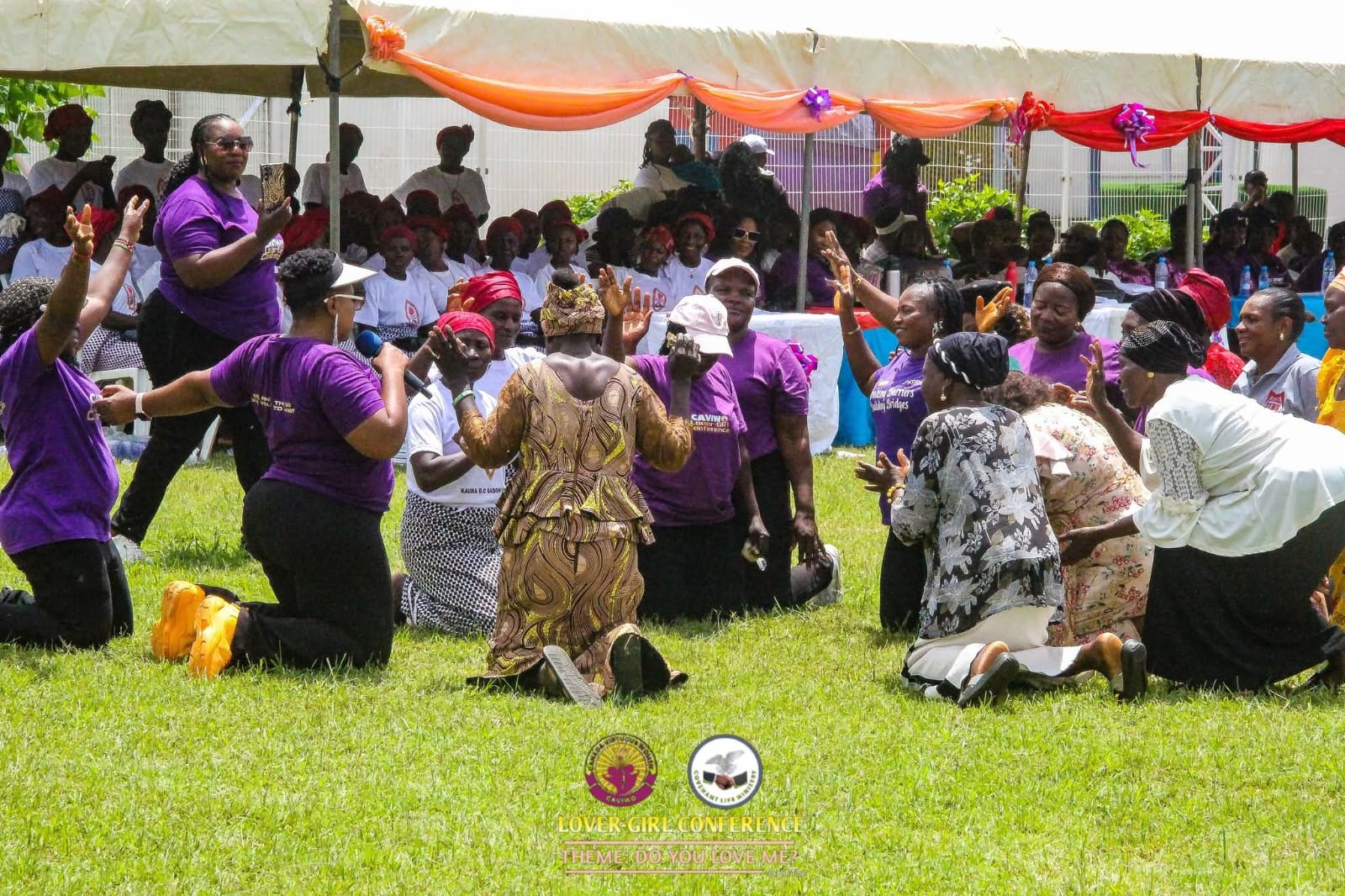
Our weekly gatherings now happen across continents, and while the languages and the songs differ, the heart is the same. A woman in Cameroon and a woman in Canada may never share a room, but they share a sisterhood. When one circle prays, the others feel it. That is the quiet miracle of a movement rooted in faith. We do not claim to explain it. We simply witness it, week after week, as women separated by oceans report the same sense of being carried by prayers they did not know were being offered. Whether one calls it the Spirit or the simple power of shared intention, the effect is real, and the women who experience it are not imagining it.
Technology has made the connection closer. Our branches join virtual gatherings, share prayer requests across time zones, and carry each other's burdens in ways the first circle could only have dreamed of. The table has grown, but it is still a table. A woman in Ottawa can pray, in real time, for a woman in Nairobi who has just shared a need, and that woman can feel, across the delay of a video call, the warmth of being held by a sisterhood she has never met in person. The technology is the medium. The sisterhood is the message.
We are careful not to let the technology replace the presence. A screen is a window, not a room, and we have learned that virtual gatherings, while precious, cannot fully substitute for the warmth of sitting beside another woman. We encourage our branches to meet in person whenever possible, and to use virtual connection to supplement, not replace, the physical circle. The balance matters. A sisterhood that exists only online is fragile. A sisterhood that exists only in person is limited. Together, they are resilient, and resilience is what a movement across continents requires.
The branches are not copies of one another. Each one reflects the culture, the needs, and the gifts of the women who form it. Our Cameroon branch focuses on vocational training and advocacy against harmful rites. Our Nigeria branch emphasizes micro-credit and gender-based violence prevention. Our Kenya branch centers on girls' education and spiritual retreats. Our Tanzania branch supports women in entrepreneurship and healthcare literacy. The differences are not divisions. They are the natural expression of a sisterhood that trusts each branch to discern what its women need. We share a root. We grow many branches. That is by design.
What unites us is not uniformity but fidelity to the same founding impulse. Every branch began with women deciding to pray together, to be known, and to belong. Every branch sustains itself through the same weekly practice. Every branch measures its success not in numbers but in the depth of the sisterhood it fosters. A branch of fifty women who truly know one another is stronger than a branch of five hundred who do not. We have learned, sometimes slowly, to value depth over scale, and the branches that have thrived are the ones that kept that value at their center.
Sisterhood is not a sentiment. It is a practice. It is the decision, made weekly, to show up for one another in prayer and in truth, wherever we are. The practice is simple. The consistency is hard. The women who sustain our branches across continents are not extraordinary. They are faithful, and faithfulness, sustained over years, is what builds a movement that can span the globe. We honor them, not because they are rare, but because they are reliable, and reliability is the unsung virtue on which every lasting sisterhood depends.
We have also learned that sisterhood across continents requires humility. The needs of women in Canada are not the needs of women in Cameroon, and a program that works in Ottawa may not work in Limbe. We resist the temptation to impose a single model on every branch. Instead, we listen to the women of each branch, support what they discern, and share resources without dictating priorities. The result is a sisterhood that is genuinely global without being genuinely uniform, and that balance is, we believe, the source of its strength. A movement that respects the local will last. A movement that flattens it will fracture.
There are moments when the distance between our branches feels vast, when a crisis in one country cannot be reached quickly by the others, when the limits of our resources become painfully clear. In those moments, we do not pretend the distance does not matter. We name it, we grieve it, and we do what we can, knowing that what we can do is not always enough. But we also remind ourselves that the sisterhood itself is a resource. A woman in crisis who knows that women on three continents are praying for her, advocating for her, and holding her in their hearts is not alone, even when the help is slow to arrive. The knowing matters. It has carried women through nights that help could not reach.
If you are part of a branch, thank you for keeping the circle open in your corner of the world. If you have never been part of one, know that the sisterhood is wider than you may have imagined, and that there is a place in it for you, wherever you are. The table that began in Ottawa now spans continents, and there is still room. There always will be. Come. Pray. Be known. Belong. The sisterhood is waiting, and it is already yours.
I remember the first time a branch leader from Cameroon joined our Ottawa circle by video. The connection was poor, her image froze, and the audio cut in and out, but when she began to pray, in her language, for a woman in Ottawa she had never met, the room went still. We did not understand every word. We understood the heart. After she finished, a woman in our circle prayed for her, in English, and the two prayers, in two languages, across a frozen screen, became one act of sisterhood that none of us who were present will forget. That moment taught me that the sisterhood across continents is not built on shared language or shared circumstance. It is built on shared willingness to carry one another before God, and that willingness, once offered, crosses every distance that geography can impose.
We have also learned that the branches teach the center as much as the center teaches the branches. A practice that emerged in our Cameroon circle, of pairing each new woman with an older member who would check on her weekly, was so effective that we adopted it in Ottawa. A form of prayer that began in our Kenya branch, of writing prayer requests on slips of paper and reading them aloud together, now enriches our Canadian gatherings. The flow of wisdom is not one direction. It is circular, and the circle is stronger because each branch contributes what it has discerned. We are not a headquarters with outposts. We are a family with many homes, and each home shapes the family, and the family is richer for every home in it.
There is a future I pray toward that I will likely not live to see. It is a future in which a woman in any country we touch can walk into a CAVIWO circle and find sisters who know her name, who will pray for her, and who will walk with her through whatever season she is in. That future is being built, one gathering at a time, by the faithful women who show up in living rooms and church halls across continents, in person and on screens, week after week, without fanfare and without recognition. They are the architects of the sisterhood, and the sisterhood they are building is, I believe, the most enduring thing CAVIWO will ever leave behind, because a sisterhood, once rooted in faith and sustained by love, outlasts every program, every grant, and every season, and continues to gather women long after the ones who planted it have gone home. That is the harvest I plant for, and I plant knowing the harvest is sure.
Written by
Adeline Ijang
Contributor to the CAVIWO community sharing stories of hope, resilience, and advocacy.