Economic dignity begins with capability. How our capacity-building track helps women move from crisis to confidence, one skill at a time.
There is a moment many women describe when they first arrive at CAVIWO. It is the moment of realizing that survival, while heroic, is not the same as living. They have endured. Now they want to build. That moment is quiet, often unspoken, but it is the hinge on which everything turns. A woman who has spent years in survival mode has trained herself to think in hours and days, not in months and years. Helping her lift her eyes to a longer horizon is the first and most important work we do.
Our Leadership and Capacity Building program is designed for that moment. We meet women where they are, whether that is re-entering the workforce after years away, building Canadian credentials as a newcomer, or stepping toward a leadership role in their community. The path is different for each woman, but the foundation is the same: practical skills, real mentorship, and the belief that capability grows with practice. We do not offer a single curriculum. We offer a framework, and within that framework each woman builds the path that fits her life, her goals, and her circumstances.
Resume writing sounds simple until you sit with a woman who has fifteen years of experience in another country and no idea how to translate it for a Canadian employer. The gap is not in her experience. It is in the language and the format that a Canadian hiring manager expects. We help her see that her years of running a household, managing a family business, or leading a community initiative are not gaps to apologize for but competencies to articulate. Once she can name what she did, she can name what she is worth, and a resume becomes not a confession of inadequacy but a case for her own value.
Interview coaching sounds routine until you meet the woman whose voice shakes because she has never been told her skills are valuable. Confidence in an interview is not a personality trait. It is a skill, and like any skill it can be learned through repetition, feedback, and the experience of being believed. We practice with women until the words stop catching in their throats. We do not teach them to perform. We teach them to recognize what they already know and to say it plainly. The transformation is not in their abilities. It is in their permission.
Financial literacy sounds dry until you watch a mother build her first household budget and realize she can plan for her children's future. A budget is not a constraint. It is a map. A woman who knows where her money goes can decide where it should go, and a woman who can decide where it should go has a future she can shape. We teach the unglamorous fundamentals: tracking income, categorizing expenses, building a small emergency cushion, understanding credit as a tool rather than a trap. These are not revolutionary concepts in isolation. In combination, in the hands of a woman who has never had them, they are life-changing.
These are not small things. They are the scaffolding of independence. And when the scaffolding holds, women climb. We have watched women arrive unsure they could ever earn again and leave running businesses of their own. We have watched women who had never opened a bank account become the financial anchors of their families. We have watched women who had been passed over for years step into leadership roles they once could not imagine. The skills are ordinary. The outcomes are extraordinary, because the women who acquire them were always capable of extraordinary things. They simply needed someone to hand them the tools.
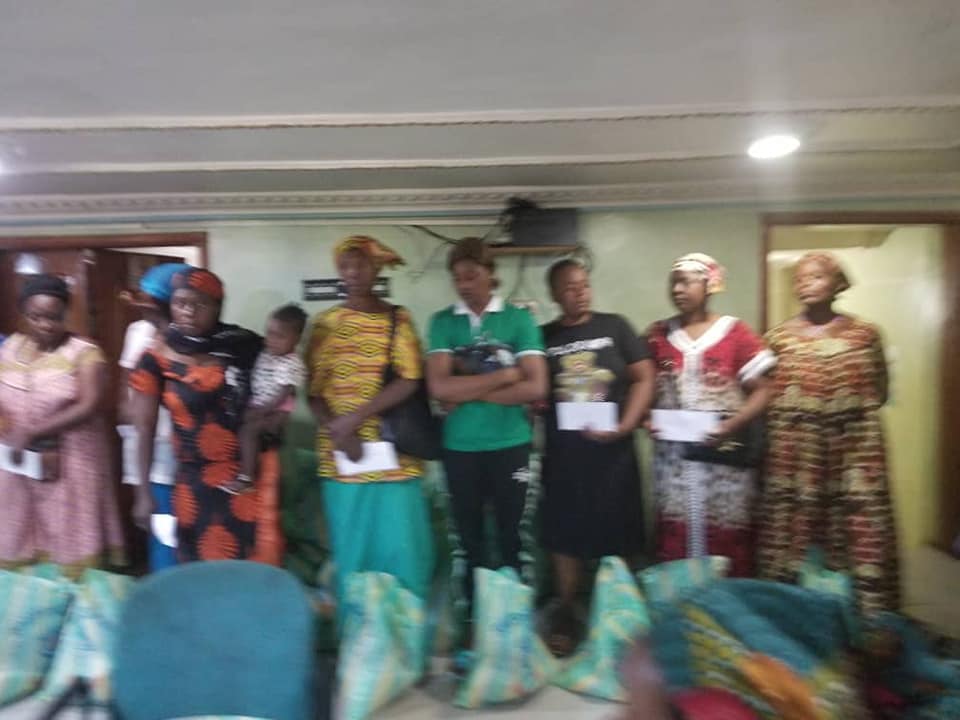
Last cohort, forty-five women completed the training. Eighty-five percent reported greater confidence. Forty-five launched businesses or secured new employment. Behind each number is a woman who moved from survival to stability, and from stability toward leadership. We share these numbers because they matter, but we are careful not to let them become the whole story. A woman who did not launch a business but who now reads her paystub with understanding has also moved. A woman who did not secure new employment but who now advocates for herself in the workplace has also climbed. Progress is not always measurable in the ways systems prefer, and we honor every form of it.
Mentorship is the thread that runs through all of this. Skills can be taught in a workshop, but confidence is built in relationship. We pair each woman with a mentor who walks with her through the program and beyond. The mentor is not a savior. She is a witness, a sounding board, and a reminder that the path, while hard, has been walked before. Many of our mentors are graduates of the program themselves, women who stood where the new participants stand and who return to say, with the authority of experience, that the climb is possible.
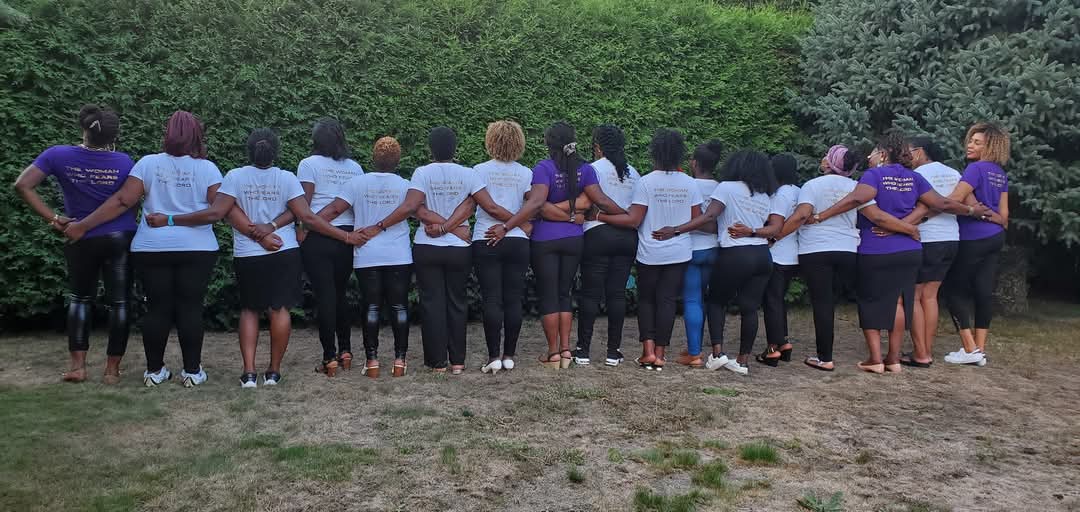
We have learned that capacity building is not a one-time intervention. It is a relationship that unfolds over months and years. A woman who completes the training does not graduate out of our community. She becomes part of it, returning to mentor, to encourage, and to remind the next cohort that the moment of wanting to build is the beginning, not the end. That continuity is what makes the work sustainable. We are not running a program. We are growing a sisterhood of capable, confident women who carry each other forward.
If you are a woman reading this and recognizing your own moment, we want you to know that the desire to build is enough to begin. You do not need to have it all figured out. You do not need to arrive confident. You need only to arrive willing. We will meet you there, and we will walk with you from survival to stability, and from stability toward whatever leadership looks like in your life. The climb is real, and so is the company. You will not make it alone.
There is a particular story from our last cohort that we carry with us. A woman who had been a teacher in her home country for twenty years arrived at our door convinced that her career was over, that no one in Canada would ever see her as a teacher again. She had been cleaning offices for three years to support her children. We did not tell her she was wrong about the difficulty. We told her she was wrong about the ending. We walked with her through the credential assessment, the bridging courses, the substitute teaching applications, and the long months of waiting. She is now a permanent substitute at a school in her neighborhood and is completing the final requirements for her full certification. The capacity we built was not a skill. It was the refusal to let her believe the story was over.
We have also learned that the women who come to us carrying the most doubt are often the ones with the most to offer. The woman who believes she has nothing to teach is frequently the woman the whole cohort learns from. We have learned to watch for her, to draw her out gently, and to make space for the wisdom she does not yet know she carries. The making of space is itself a capacity-building act, because a woman who is given space to contribute learns that she has something to contribute, and the learning changes everything she does afterward.
We measure the long-term impact of this work not in the months after the cohort but in the years. We follow up annually with our graduates, and the trajectories tell us more than any exit survey could. Some women climb steadily. Some plateau and hold, which is itself a victory for a woman who was previously in freefall. Some change direction entirely, discovering in the program a passion they did not know they had. We count all of these as success, because success, for a woman who arrived in survival mode, is any forward motion at all, and the forward motion, once begun, tends to continue long after our direct involvement has ended.
There is a future we are building toward in which the women who pass through this program become the architects of the next one. We already see it in the graduates who return as mentors, as facilitators, as donors, and as advocates. The program that produces its own leaders is a program that will outlast its founders, and that is the deepest measure of the capacity we are building. We are not building dependency on CAVIWO. We are building the capacity to build without us, and the building without us is the truest sign that the building worked.
If you are considering supporting this work, we want you to know what your support makes possible. It makes possible the resume that tells the truth. It makes possible the budget that becomes a map. It makes possible the mentor who walks beside a woman through the hardest months of her climb. It makes possible the moment when a woman who arrived in survival mode looks up and sees, for the first time, a horizon she is walking toward rather than a crisis she is running from. That moment is the return on your investment, and it is a return that compounds, because a woman who reaches that horizon turns back to help the next woman find it.
We will keep building capacity, one woman, one skill, one relationship at a time, because we have seen what happens when the scaffolding holds. Women climb. And when women climb, the families, the communities, and the world they touch climb with them. That is the work. That is the why. And that is the future we are honored to build, with every woman who walks through our door and every person whose generosity makes the door possible to keep open.
Written by
CAVIWO Leadership Team
Contributor to the CAVIWO community sharing stories of hope, resilience, and advocacy.